

Keir Starmer resigns as Prime Minister of UK amid pressure from Labour Party
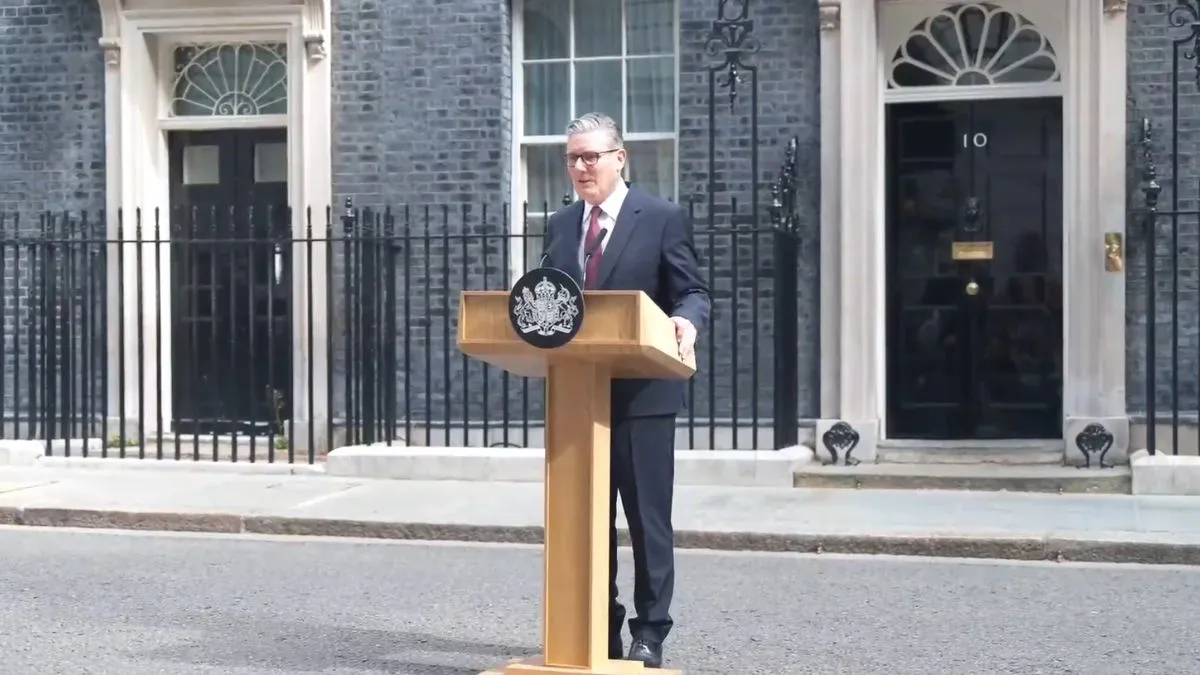
Keir Starmer on Monday announced his resignation as Prime Minister of the United Kingdom and leader of the Labour Party. The move is said to come after rising pressure from within his own party. Starmer has said he will continue as caretaker prime minister until the Labour Party selects a new leader in the coming weeks.
He came out of 10 Downing Street alongside his wife, where he was met with applause and cheers. He then went on to deliver a resignation statement outside the Prime Minister’s residence.
“The question my party is asking now is whether I am best placed to lead us into the next general election. I have heard the answer of my parliamentary party to that question and I accept that answer with good grace. Every decision I have taken has been about putting the country I love first. That is why I will resign as leader of the Labour Party,” Starmer said.
Starmer said he had also apprised King Charles III on Monday morning about the decision. He said that becoming prime minister of the United Kingdom was the “proudest moment” of his life.
Starmer said he will make sure there is an orderly transfer of power. He also said he will fully support his successor.
Towards the end of the address, he became emotional and said he would now focus more on his family life and become the best husband and father he can be.
The reported development marks the end of his time in office, a responsibility that he helmed for over two years.
His exit was prompted after Andy Burnham won a special election last week. The former Greater Manchester mayor, who is widely popular, was preparing to contest Starmer for the Labour leadership.
Why did Starmer resign?
A major factor behind Starmer’s resignation was a loss of parliamentary support within his own party. A majority of Labour MPs had shifted their backing to Andy Burnham, while growing dissent within the Cabinet further intensified instability and ultimately contributed to his resignation.
Other factors included disagreements over policy direction, economic performance, public approval ratings and reactions to major national decisions.
He also faced criticism over tax policy, welfare decisions, and high-profile appointments, including that of Peter Mandelson.