

Centre Proposes Article 371(K) Framework for Ladakh, May Pave Way for Elected Legislature
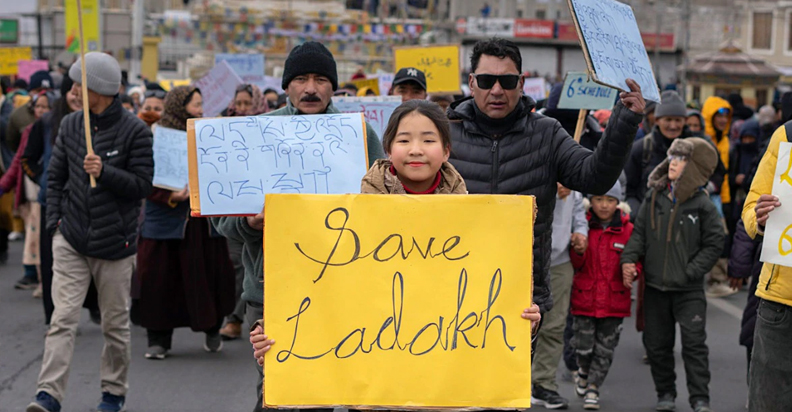
The Union Ministry of Home Affairs (MHA) has proposed a new constitutional provision, Article 371(K), to establish a special governance framework for Ladakh, including an elected legislative body for the Union Territory.
The proposed provision would introduce a new “Chapter K” under Article 371, which is part of Part XXI of the Constitution dealing with temporary, transitional and special provisions. The arrangement is being considered as a customised, or sui generis, model specifically for Ladakh.
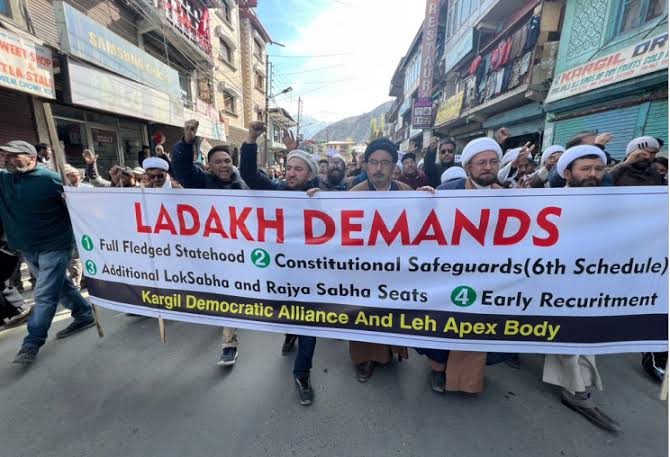
Under the proposal, Ladakh could get a directly elected UT-level legislative body with powers over key subjects including land, culture, language, forests, environment and natural resources. It could also exercise powers over other matters currently applicable to Union Territories under Article 240.
Why is Ladakh demanding constitutional safeguards?
Ladakh was separated from Jammu and Kashmir and made a Union Territory without a legislature in August 2019, following the abrogation of Article 370 and the Jammu and Kashmir Reorganisation Act, 2019.
Before 2019, Ladakh was represented by four MLAs in the Jammu and Kashmir Legislative Assembly. After becoming a UT without an elected Assembly, administration has largely remained in the hands of the Lieutenant Governor and the bureaucracy.
Concerns over land ownership, employment opportunities, demographic changes and protection of Ladakh’s distinct cultural identity have since intensified.
The region currently has two autonomous hill councils — the Ladakh Autonomous Hill Development Council, Leh, and the Ladakh Autonomous Hill Development Council, Kargil. However, their powers are limited and they do not enjoy the constitutional protection available to Autonomous District Councils under the Sixth Schedule.
The Leh Apex Body (LAB) and Kargil Democratic Alliance (KDA) have therefore been demanding greater democratic powers, protection for tribal communities, safeguards for land and resources, and, in particular, statehood and inclusion under the Sixth Schedule.
Article 371(K) versus the Sixth Schedule
The proposed Article 371(K) would be different from extending the Sixth Schedule under Article 244 to Ladakh.
The Sixth Schedule provides constitutionally protected Autonomous District Councils with legislative, judicial and administrative powers over areas such as land, forests, water, agriculture, village administration, social customs and certain natural-resource matters. It currently applies to specified tribal areas in Assam, Meghalaya, Mizoram and Tripura.
The National Commission for Scheduled Tribes (NCST) recommended in September 2019 that Ladakh be brought under the Sixth Schedule, citing its predominantly tribal population and distinct cultural heritage.
However, the proposed Article 371(K) would instead create a separate constitutional arrangement tailored specifically to Ladakh, rather than extending the existing Sixth Schedule framework.
What are the unresolved issues?
Several important questions remain under discussion, including the extent of the proposed elected body’s executive powers, financial authority, control over budgets and planning, role in administration and bureaucracy, and powers relating to police and law and order.
The division of powers between the proposed elected body and the Lieutenant Governor is also expected to be a key issue.
Ladakh’s representatives have also demanded that major administrative, bureaucratic and land-related decisions should not be taken by the Lieutenant Governor until the new governance arrangement is finalised.
What would it take to create Article 371(K)?
Since Article 371(K) would be a new constitutional provision, its introduction would require an amendment to the Constitution under Article 368.
A Constitution Amendment Bill can be introduced in either House of Parliament. It generally requires a special majority in both Houses — a majority of the total membership of each House and at least two-thirds of members present and voting.
For amendments involving specified federal provisions, ratification by at least half of the State Legislatures is also required.
Once Parliament completes the prescribed procedure and the President gives assent, the new provision would become part of the Constitution.
The proposed Article 371(K), if eventually enacted, would therefore represent a significant constitutional experiment: creating a special federal-style governance model for a Union Territory while addressing Ladakh’s demands for greater democratic representation and protection of its land, culture and natural resources.