

What happens to your body when you donate blood frequently?
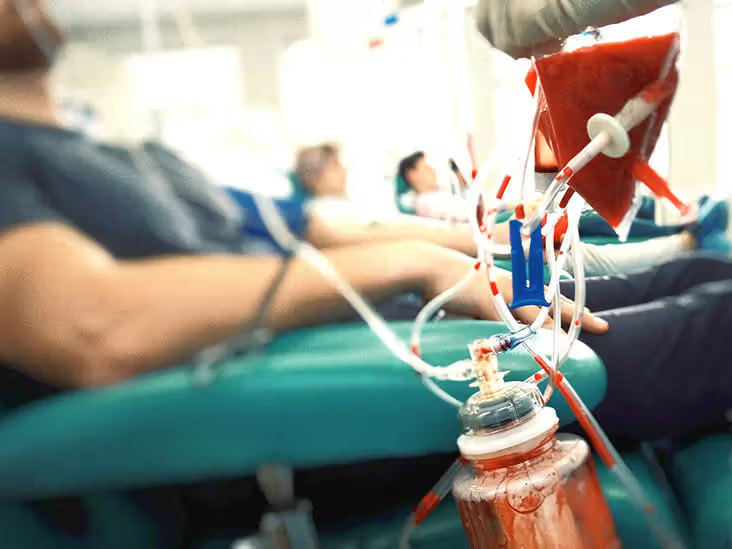
Blood donation is often spoken about in terms of how it helps patients in need. But what happens inside your own body when you donate blood regularly? Does frequent donation weaken you over time, or does the body adapt and recover on its own?
According to Dr. Sangeeta Pathak, Senior Director, Transfusion Medicine, Max Hospital, Saket, the body is remarkably efficient at replacing what is lost during donation. While regular donors do experience certain physiological changes, most of them are temporary and manageable when donations are made within medically recommended limits.
What happens after you donate blood?
One of the first things the body restores is its fluid volume.
“During a whole blood donation, the body loses around one unit of blood, or approximately 350 to 450 millilitres. However, plasma volume is usually replenished within 24 to 48 hours, provided the donor remains adequately hydrated,” Dr Pathak explained.
The recovery process does not stop there. The loss of red blood cells also triggers a response from the kidneys.
According to the transfusion medicine specialist, “When red blood cells are lost, specialised peritubular cells in the kidneys detect the resulting drop in oxygen levels. They respond by releasing erythropoietin, or EPO, a hormone that signals the bone marrow to increase the production of new red blood cells.”
She added that while the body starts responding quickly, the process of producing fully mature red blood cells takes time.
“EPO stimulates the bone marrow to ramp up production, but red blood cells typically take around 90 to 120 days to mature completely.”
Another important change involves iron levels.
“Each unit of whole blood donation removes roughly 220 to 250 milligrams of iron from the body,” noted Dr Pathak.
Potential health benefits of regular blood donation
When donation is carried out responsibly and within prescribed safety guidelines, it may offer some additional health advantages.
One of these is helping prevent excessive iron accumulation.
“For men and postmenopausal women, iron tends to build up in the body over time because they do not experience regular menstrual blood loss. Blood donation can act as a natural pressure valve by reducing excess iron stores,” Dr Pathak said.
She further explained that excess iron may contribute to oxidative stress and can potentially affect blood vessels and organs such as the liver.
The doctor also pointed to possible benefits related to blood flow.
“Regular blood donation may slightly reduce blood viscosity, or thickness. Blood that flows more smoothly through blood vessels creates less friction against arterial walls and may contribute to a lower risk of heart attacks and strokes.”
Another often-overlooked advantage is the routine health assessment that accompanies donation.
“Every donation involves a basic health screening that includes checks of blood pressure, pulse rate and haemoglobin levels. These assessments can sometimes serve as an early indicator of cardiovascular or haematological changes,” she said.
How to donate safely
While regular donation is generally considered safe for healthy individuals, Dr Pathak stressed the importance of following recommended intervals between donations.
“Blood centres follow strict waiting periods to protect donor health. For whole blood donation, this is typically around 90 days for men and 120 days for women,” Dr Pathak said.
The expert emphasised that these guidelines are designed to give the body enough time to restore blood components and maintain healthy iron levels.
For most people, the key is balance. Blood donation can be a lifesaving act for someone else, while the body, given enough time and proper care, is usually well equipped to recover from the process.
Disclaimer: Tips and suggestions mentioned in the article are for general information purposes only and should not be construed as professional medical advice.