

National Award-Winning Director Hiren Bora’s New Film ‘Phring Gital’
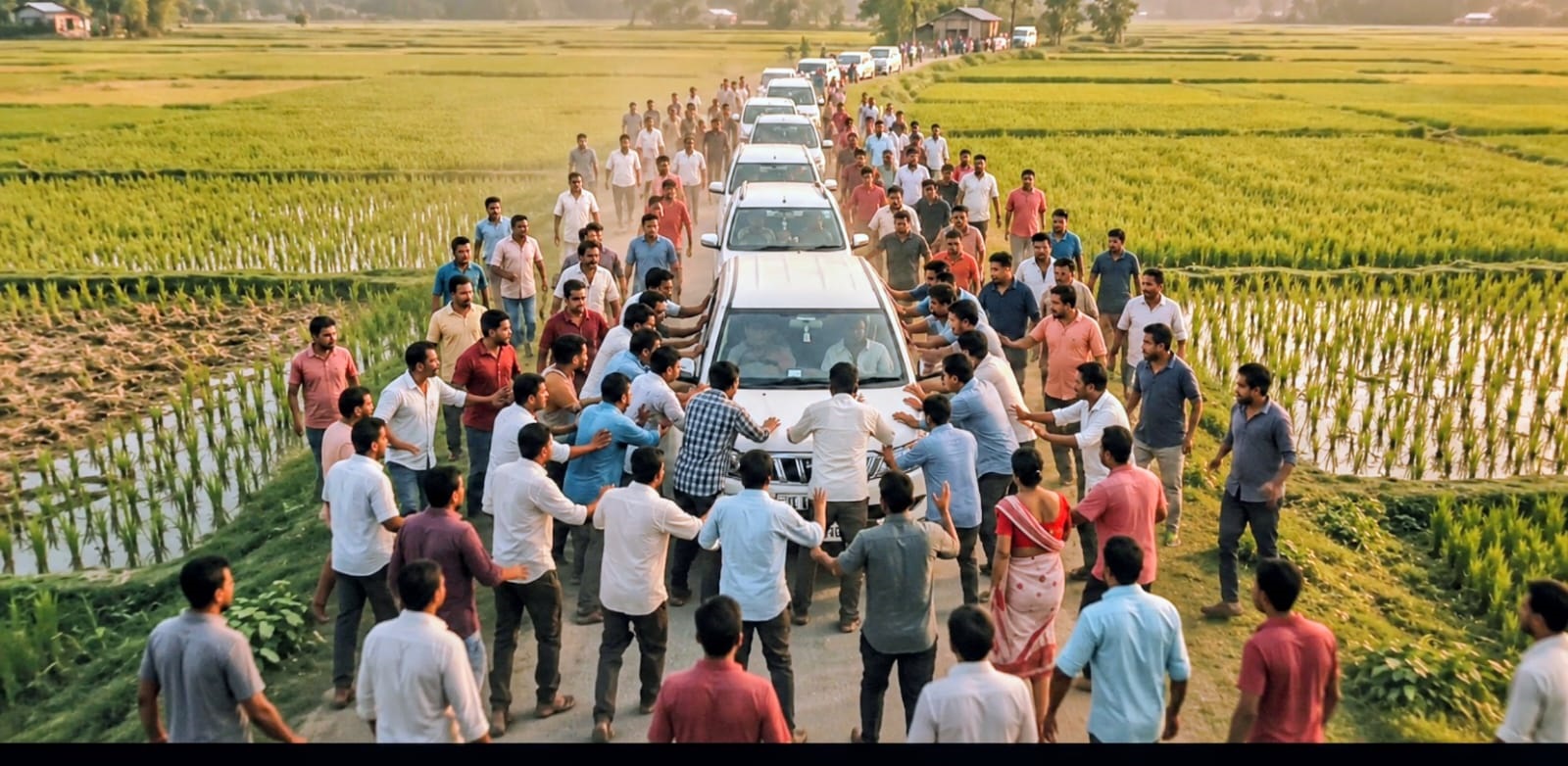
National Film Award-winning director Hiren Bora is set to present his new Assamese and Garo-language film, ‘Phring Gital – The Dawn of a New Day’. Centred on social realities, harmony among communities and life along the Assam–Meghalaya border, the film has already generated interest among film enthusiasts.
One of the most significant chapters in Hiren Bora’s filmmaking journey is his debut film, ‘Basundhara – The Earth’. Based on his own story, the film won the Rajat Kamal (Silver Lotus) Award for Best Regional Film at the 57th National Film Awards in 2009. It also received the ‘Rupkonwar Jyotiprasad Agarwala Award’ instituted by the Government of Assam, along with several other honours at the Assam Film Awards in 2010.
Hiren Bora has subsequently directed several significant films, many of which have been screened at film festivals in India and abroad, earning awards and critical appreciation. Among them, ‘Kshobh’, a 2014 film centred on child psychology, deserves special mention. The film was acquired by the Government of Karnataka and arrangements were made for its screening in 103 cinema halls across the state for nearly 1.2 million students. He later made ‘Seema – The Untold Story’ in 2015, set against the backdrop of the 1962 Sino-Indian conflict, followed by ‘Baahi – The Flute’ (2017), the Rabha-language film ‘Nasimai – Darling’ (2020), and ‘Borkha – The Veil’ (2024). ‘Nasimai – Darling’ received appreciation at several international film festivals, including the Kolkata International Film Festival and the Dhaka International Film Festival, and won the Best Editing Award at the 2023 Sweden Film Awards. ‘Borkha – The Veil’ has also received awards at several film festivals in India and abroad.
Continuing this journey, Hiren Bora has now directed ‘Phring Gital – The Dawn of a New Day’. The story unfolds around two villages in the Goalpara-adjoining region along the Assam–Meghalaya border—one inhabited by the Garo community and the other by the Rabha community. Although the two villages lie in different states, their people share deep bonds through their way of life, festivals and social relationships. The border may divide the land, but it has not been able to divide the hearts of the people.
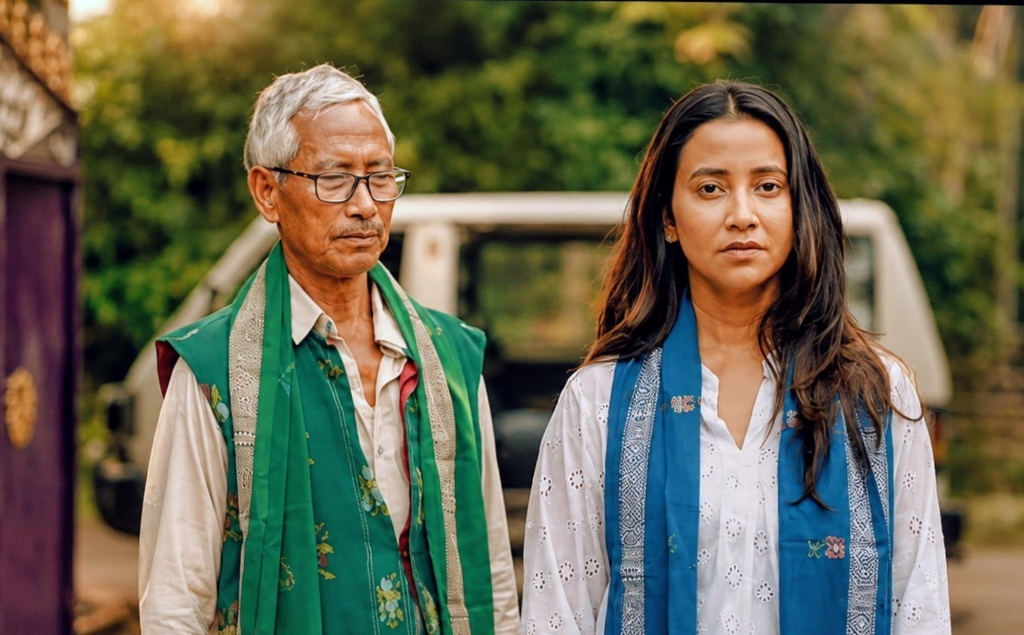
Amid this atmosphere of harmony, a love story develops between a Garo young woman and a Rabha young man. However, their relationship faces opposition from traditional values, social attitudes and family resistance. The conflict between personal love and social identity gives the film a deeper social context.
Running parallel to this story is another harsh reality of life in the border region—the conflict between humans and wild elephants. As people struggle to protect their agricultural land and livelihoods, tensions arising from border disputes further complicate the situation. The film also explores how misinformation and suspicion can create divisions within a society that has otherwise lived together in harmony.
Produced under the banner of Suravi Enterprise, the film is produced, planned and directed by Hiren Bora. The screenplay has been written by Hiren Bora and Naren Patgiri, who has also written the story and dialogues. The Garo translation has been done by Suraj Sangma and Bhogen Momin. Malay Kumar Roy serves as Associate Director, while D’ Rabha is the Assistant Director. Cinematography is by Vivek Banerjee, with Budh Das, Tirtha Nath and Biren Das as Assistant Cinematographers. Art Direction is by Pankaj Bezbaruah, Background Score by Bikash Barua, and Editing by Deepak Mandal and Sound Design by Bijoy Nath.
The film features Barsha Rani Bishaya, Rupam Chetia, Suraj Kalita, Rayanti Rabha, Suraj Sangma, Ahid Khan Paris, Bhogen Momin, Walsrang D Shira, Amrita Marak, Nokme K Sangma and several other Assamese, Rabha and Garo artistes.
At its heart, ‘Phring Gital’ raises a compelling question: A border may divide the land, but how far can it divide human relationships? Bringing together social harmony, social responsibility, love, identity and the realities of life along the border, the film is currently in the final stage of technical post-production. It is expected to mark another significant addition to Hiren Bora’s journey as a filmmaker.