

Controversy Over Pond Excavation Inside Hollongapar Gibbon Sanctuary; Forest Department Faces Questions Over Use of Government Funds
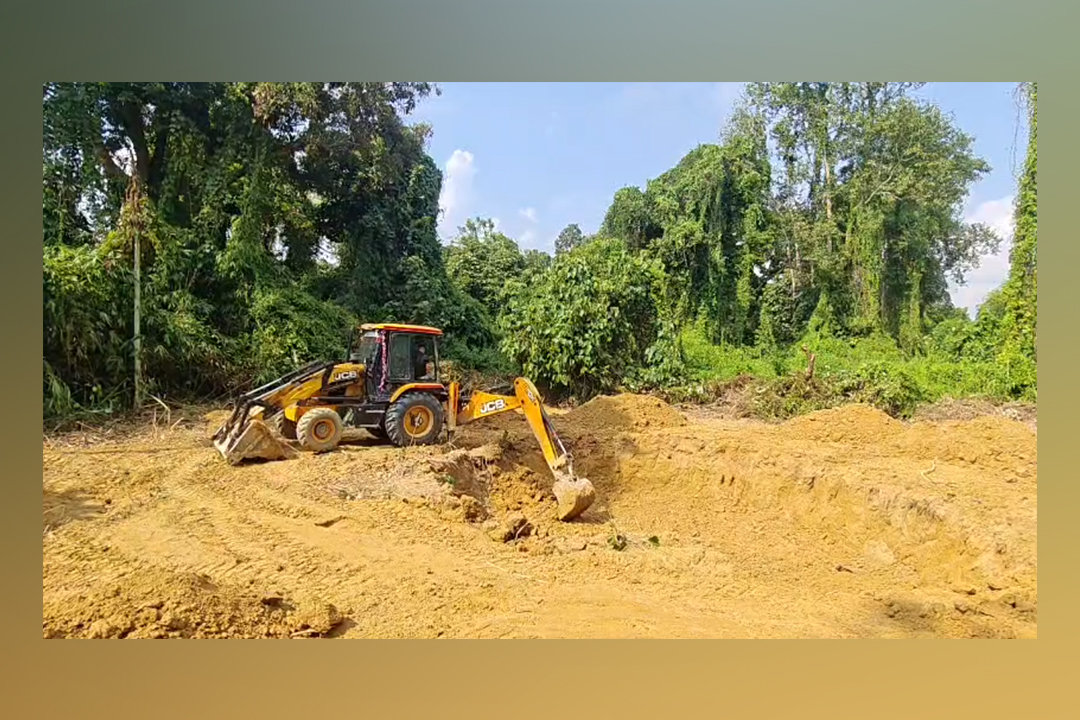
A controversy has erupted over the Forest Department’s decision to excavate ponds inside the Hollongapar Gibbon Sanctuary in Mariani. Under the SOPD scheme, two ponds are being constructed to provide drinking water for wildlife. However, questions are now being raised by concerned sections of society over the effectiveness of the project and the proper utilisation of government funds.
While the Forest Department has been promoting environmental protection through plantation drives and forest conservation initiatives, excavation work is simultaneously underway inside the sanctuary. This has sparked a debate over whether such activities are in keeping with the objective of protecting the forest ecosystem and maintaining its natural balance.
According to available information, the Forest Department has undertaken the construction of two ponds under the SOPD scheme to ensure drinking water facilities for wildlife inside the sanctuary. Each pond is reportedly designed to measure 40 feet in length, 40 feet in width and approximately one metre in depth.
Although providing drinking water for wildlife is considered a welcome initiative, concerns have been raised about the practical utility of these ponds. Questions remain over how long the ponds will retain water after the monsoon and whether they will actually serve the needs of wildlife during the dry season.
It is worth mentioning that several natural water bodies already exist inside the Hollongapar Gibbon Sanctuary. In this context, questions are being raised over whether improving, restoring and conserving these existing natural water bodies could have been a more effective way of addressing the drinking water needs of wildlife instead of excavating new ponds.
Meanwhile, the Sangrami Yuva Chatra Parishad has expressed dissatisfaction with the Forest Department’s initiative. The organisation has questioned how much actual benefit the project will provide to wildlife and expressed doubts over whether the expenditure under the scheme will deliver the intended results. It has also raised concerns over possible misuse of government funds.
The organisation has therefore demanded a fair and impartial investigation into the entire matter. It has called for scrutiny of the necessity of the project, its technical aspects, the funds allocated and the quality of the excavation work.
Several questions have now come to the forefront. Was there really a need to excavate new ponds when natural water bodies already exist inside the sanctuary? How effectively will these two ponds address the drinking water requirements of wildlife? Will the government expenditure under the scheme actually translate into tangible benefits for the animals?
As the controversy surrounding wildlife conservation continues, all eyes are now on the Forest Department and its response to the allegations. An official clarification regarding the project’s necessity, effectiveness and financial transparency is awaited.