

India, Australia seal uranium deal, to enhance defence and maritime cooperation
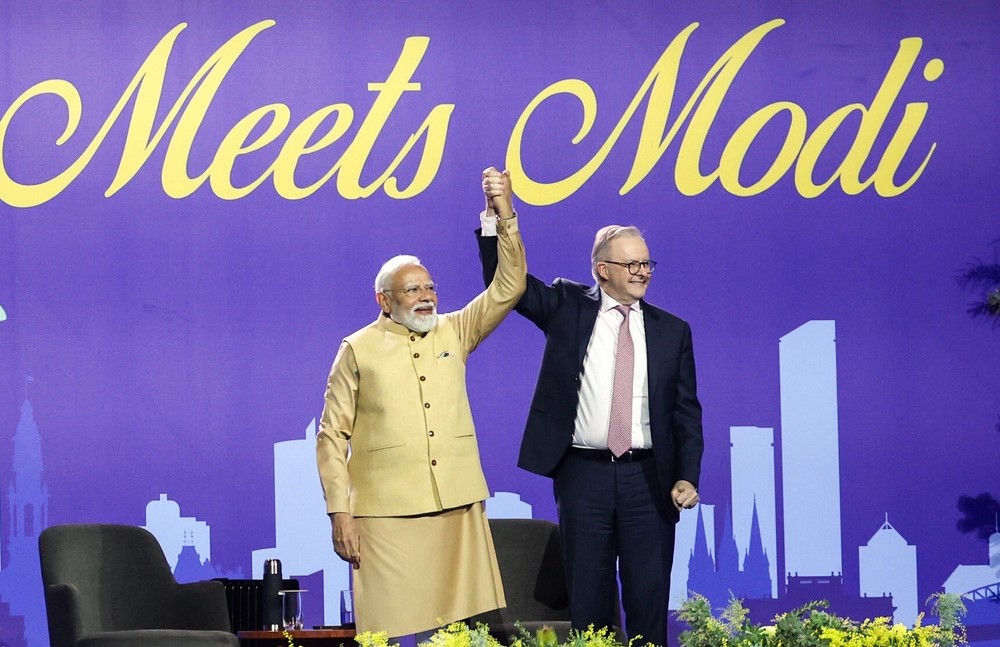
India and Australia on Wednesday agreed to operationalise their civil nuclear cooperation agreement, paving the way for uranium exports to India, while also unveiling key initiatives to strengthen defence and maritime security ties during Prime Minister Narendra Modi’s meeting with his Australian counterpart Anthony Albanese.
The adoption of the India-Australia Joint Declaration on Defence and Security Cooperation (JDDSC) and the India-Australia Maritime Security Collaboration Roadmap (MSCR) were among the major outcomes of the third India-Australia Annual Summit, which resulted in 18 agreements and initiatives spanning defence, maritime security, energy, cyber and critical technologies, education, mining, research and cultural cooperation.
Foreign Secretary Vikram Misri said the two defence-related initiatives reflected the need for the bilateral partnership to evolve in response to changing geopolitical dynamics.
“One of the key outcomes of the meeting today was the adoption of the Joint Declaration on Defence and Security Cooperation, as well as an India-Australia Maritime Security Collaboration Roadmap. These constitute recognition that the partnership must evolve to meet changing strategic circumstances, and they reflect a commitment to advancing our defence and security partnership,” Misri said during a special media briefing.
The new JDDSC expands upon the 2009 Joint Declaration on Security and outlines cooperation in areas including defence, maritime security, cyber security, defence industries, counter-terrorism, humanitarian assistance and disaster relief (HADR), emerging technologies and regional security.
Prime Minister Modi and Albanese reaffirmed their commitment to strengthening the Comprehensive Strategic Partnership established in 2020 and advancing a shared vision of an “open, peaceful, stable and prosperous Indo-Pacific”.
The two leaders acknowledged growing geopolitical uncertainties and threats to regional stability, stressing that disputes must be resolved peacefully without the threat or use of force or coercion, in accordance with international law.
They reiterated support for a rules-based regional order, respect for sovereignty and territorial integrity, and adherence to the United Nations Convention on the Law of the Sea (UNCLOS), including freedom of navigation and overflight.
Recognising the evolving strategic environment, India and Australia committed to building an “advanced, integrated and top-tier defence and security partnership”.
Under the new framework, both sides agreed to increase the complexity of military exercises, enhance interoperability and information-sharing between their armed forces, expand aircraft deployments from each other’s territories, and strengthen personnel exchanges, education, training and liaison arrangements.
The two countries will also explore cooperation in developing skilled defence workforces and deepen collaboration among defence industries, innovation ecosystems and defence science and technology institutions.
The maritime security roadmap places greater emphasis on information-sharing, capability development, capacity building and operational coordination. The leaders also welcomed a Memorandum of Understanding between the Indian Coast Guard and Australia’s Maritime Border Command to enhance cooperation in maritime law enforcement, maritime domain awareness and border protection.
The joint statement described defence and security cooperation as “a cornerstone of the partnership in an increasingly complex strategic environment”, adding that the new declaration marked “a step change in the depth and ambition” of bilateral ties.
India and Australia also announced the establishment of an Annual Defence Ministers’ Dialogue to strengthen consultations and defence cooperation. The leaders welcomed the expanding scale and complexity of bilateral military exercises under the Mutual Logistics Support Arrangement.
The partnership will also focus on cyber security, critical and emerging technologies, resilient supply chains and strategic technologies through the Australia-India Partnership on Cyber, Critical Technologies and Supply Chains (PACTS).
On counter-terrorism cooperation, the two sides agreed to enhance intelligence-sharing on terrorist threats and strengthen efforts against violent extremism, terrorism financing, online radicalisation, threats to critical infrastructure and misuse of emerging technologies by terrorist organisations.
India and Australia further committed to expanding humanitarian assistance and disaster relief cooperation through joint exercises, expert exchanges, information-sharing and regional response mechanisms such as the Quad Indo-Pacific Logistics Network.
Both countries reaffirmed support for regional organisations, including ASEAN, the Indian Ocean Rim Association (IORA) and the Pacific Islands Forum (PIF), while pledging to work with partners such as the United States and Japan to promote peace and stability in the Indo-Pacific.
Among other defence outcomes, Australia invited an Indian military instructor to serve at the Australian Defence College during 2028-29. The two sides also agreed to continue work towards a Memorandum of Understanding for the provision of defence articles and services, alongside greater industry-to-industry cooperation.
The broader package of 18 outcomes announced during Prime Minister Modi’s visit also included the operationalisation of the India-Australia Civil Nuclear Agreement, an energy security partnership, cooperation in cyber and critical technologies, education and research collaborations, mining partnerships, cultural exchanges and the establishment of Australian university campuses in India.
Prime Minister Modi said the outcomes reflected the growing confidence between the two countries and their shared commitment to future cooperation.
“The outcomes during this visit reflect the confidence with which India and Australia are looking towards the future. Together, we will continue to unlock new opportunities for growth, innovation and shared prosperity,” PM Modi said in a post on X.
The two leaders said the expanded partnership demonstrated growing strategic trust between India and Australia and their shared resolve to promote peace, stability and prosperity across the Indo-Pacific region.
Prime Minister Modi arrived in Australia as part of the second leg of his three-nation tour and is scheduled to travel to New Zealand next.