

India–New Zealand Free Trade Agreement Comes into Force; Agreement grants duty-free access to 100% of Indian exports to New Zealand
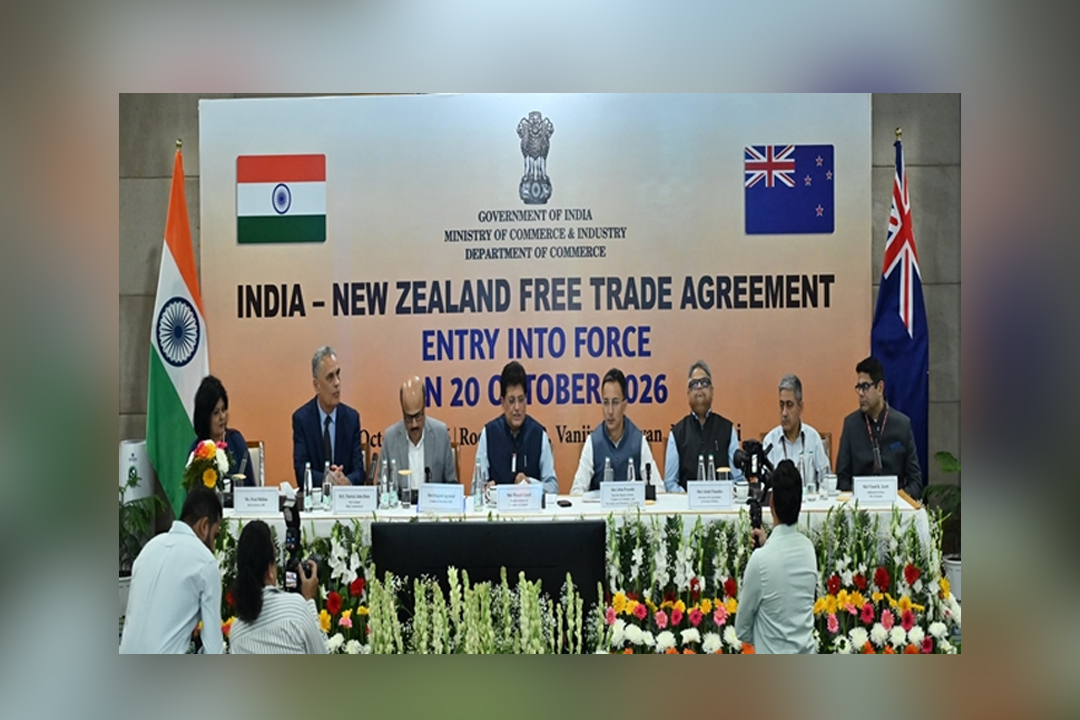
The India–New Zealand Free Trade Agreement (FTA) came into force on the occasion of Vijay Dashami, opening up new opportunities for Indian exporters by providing duty-free access to 100 per cent of Indian exports to New Zealand.
Addressing a ceremony in New Delhi, Union Minister of Commerce and Industry Piyush Goyal said the agreement aligns with Prime Minister Narendra Modi’s vision of Viksit Bharat 2047. He stated that the FTA would create significant opportunities for Indian exporters, particularly micro, small and medium enterprises (MSMEs), artisans, farmers and the pharmaceutical sector.
The Minister highlighted that both countries have agreed to work towards doubling bilateral trade in goods and services to approximately ₹35,000 crore by 2030.
Mr Goyal said Indian farmers would benefit from wider market access for fruits, vegetables, spices and other agricultural products. The agreement is expected to improve productivity, increase incomes and strengthen livelihoods. He also emphasised that sensitive sectors, including dairy, remain protected to safeguard farmers’ interests.
The Minister said New Zealand’s commitment to facilitate investments worth US$20 billion in India could significantly strengthen manufacturing, infrastructure, services and innovation. He added that the agreement would also create employment opportunities and expressed confidence that the partnership would achieve further milestones in mutual growth and prosperity.
The FTA was signed in April this year at Bharat Mandapam in New Delhi. It is expected to open new avenues for cooperation in services, investment and the mobility of professionals, students and young people, including enhanced opportunities for Indian professionals and students.
India and New Zealand share longstanding relations, supported by strong people-to-people ties and growing cooperation in trade, investment, agriculture, education, sports and technology. Bilateral merchandise trade between the two countries stood at approximately US$1.1 billion in 2025–26.
On the occasion, Mr Goyal flagged off the first-ever export of a JCB machine from India to New Zealand. Export consignments covering agriculture, gems and jewellery, engineering, sporting goods, footwear and leather sectors are also planned.
These initiatives reflect the confidence of Indian manufacturers and highlight the new opportunities the agreement is expected to create for exporters across the country.