

Strait of Hormuz Contested: US and Iran Trade Conflicting Claims Amid Nuclear Agreement Roadmap
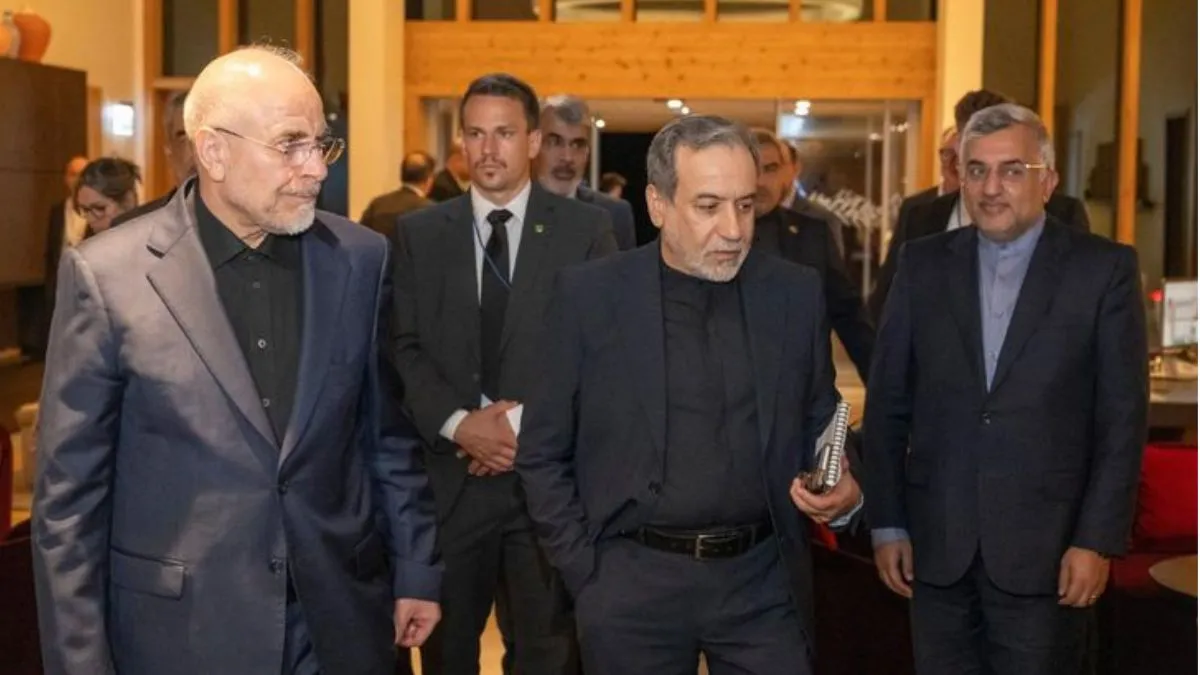
Just a day after the United States celebrated a major diplomatic breakthrough with Iran, starkly contrasting statements from Tehran and the White House indicate that the post-conflict security architecture of the Middle East remains deeply contested.
While US Vice President JD Vance hailed the latest round of Switzerland-based talks as having laid a “good foundation for a successful final deal,” Iran’s chief negotiator, Mohammad Bagher Ghalibaf, delivered a blunt warning regarding the Strait of Hormuz—one of the world’s most vital energy chokepoints.
Tehran’s Stance: ‘Hormuz Will Never Return to Pre-War Status’
Speaking to reporters while returning from Switzerland, Ghalibaf declared that the management of the Strait of Hormuz has permanently changed and will now operate under “Iranian arrangements.”
“Everyone should know that management of the Strait of Hormuz will never return to the way it was before the war,” Ghalibaf said, reiterating Iran’s historical skepticism toward Western diplomacy. “Iran has never trusted the Americans and never will.”
Despite the aggressive rhetoric, Ghalibaf did confirm a significant operational concession: the establishment of a direct communication hotline and coordination center between Washington and Tehran. The mechanism is designed to allow naval vessels and commercial ships to directly contact authorities to clear up navigational disputes, confusion, or security concerns in the waterway. Ghalibaf maintained that Iran would strictly enforce international maritime law while managing the route.
Trump Counter-Claims ‘Total Control’
The narrative from Tehran was met with swift resistance in Washington. Speaking from the Oval Office on Tuesday, US President Donald Trump rejected any notion of American retreat, asserting that the United States remains firmly in command of the strategic waterway.
“We have total control of the Strait,” Trump told reporters, attributing the stability of the region to US naval deployment. “We have a navy… there was a blockade, which was more effective than dropping bombs. We’re doing very well with respect to the Hormuz Strait.”
The 60-Day Roadmap to a Final Deal
The contrasting political posturing comes immediately after both nations agreed to a strict timeline to iron out a comprehensive, permanent settlement.
Key outcomes of the recent Switzerland talks include:
- 60-Day Deadline: Both sides have committed to launching immediate technical negotiations overseen by a newly established high-level committee to finalize a treaty within two months.
- Lebanon De-confliction: A specialized de-confliction mechanism involving Lebanon has been set up to protect fragile regional ceasefires and prevent renewed military escalation.
- Economic Concessions: Vice President Vance hinted that Washington may consider unfreezing certain blockaded Iranian financial assets to encourage trade compliance.
Discrepancies on Sanctions Relief
Following the conclusion of Monday’s talks, Iranian Foreign Minister Abbas Araghchi claimed that a formal blockade had been lifted, certain frozen assets were already being released, and Iranian oil and petrochemical exports were now exempt from restrictions under a broader regional reconstruction framework.
However, the official joint statement released by both governments notably omitted any explicit mention of asset releases or permanent oil exemptions, leaving the true extent of Washington’s economic concessions shrouded in ambiguity as technical talks begin.