

US Grants Surprise Oil Lifeline to Iran: What It Means for India’s Energy Security
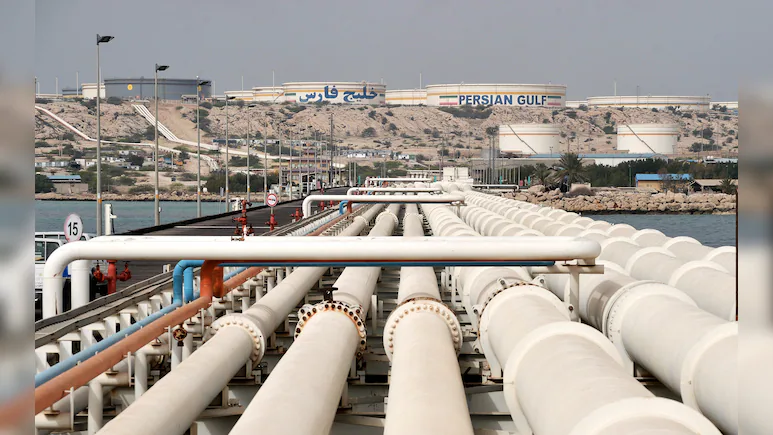
In a major geopolitical policy shift, Washington has issued a temporary 60-day waiver allowing the production, sale, delivery, and import of Iranian crude oil, petroleum products, and petrochemicals. Valid until August 21, the move is a confidence-building measure tied to ongoing diplomatic negotiations aimed at securing a broader peace agreement and restarting International Atomic Energy Agency (IAEA) nuclear inspections.
Global energy markets reacted instantly to the announcement, with crude prices dipping as traders anticipated a fresh influx of supply.
For India—the world’s third-largest energy consumer—this surprise development could have sweeping long-term implications, even if tankers do not immediately begin sailing from Iran to Indian ports.
Why the Waiver Matters to India
India imports nearly 85% of its crude oil, making its economy highly vulnerable to global price fluctuations. Higher crude prices directly spike India’s import bill, fuel domestic inflation, and strain fiscal calculations.
Over the last four years, India’s oil-sourcing strategy has shifted dramatically:
- The Russian Pivot: Following the Russia-Ukraine war, India tapped into discounted Russian crude, which now accounts for 33% to 40% of its total imports.
- Middle East Reliance: Traditional Gulf heavyweights like Saudi Arabia, Iraq, and the UAE still fulfill roughly half of India’s energy needs.
Because India’s supply is highly concentrated in the Middle East, any escalation in regional tensions poses a severe risk. Re-introducing Iran into the mix offers New Delhi a critical alternative source to hedge against geopolitical shocks.
A Historical Partnership Revived?
Before the US reimposed strict sanctions in 2018, Iran was one of India’s top three oil suppliers. Indian refiners heavily favored Iranian crude due to its:
- highly competitive pricing
- favorable credit terms (often allowing 60 to 90 days for payment)
- significantly lower freight costs due to geographical proximity
While the sanctions completely halted Indian purchases for years, this 60-day window reopens a diplomatic and commercial door that had been firmly shut.
Can India Resume Buying Immediately?
The Short Answer: Unlikely in the immediate term, but highly beneficial regardless.
Refiners operate on long-term schedules and are hesitant to alter supply chains for a brief 60-day window. However, the waiver benefits India in two distinct ways:
- Bargaining Power: The mere possibility of Iranian oil entering the global market deflates benchmark prices, giving Indian refiners stronger leverage when negotiating contracts with other suppliers.
- De-escalation in the Strait of Hormuz: A massive chunk of India’s oil passes through this narrow, volatile maritime chokepoint. As part of the US-Iran understanding, commitments have been made to ensure maritime security and free shipping movement. A safer Strait of Hormuz lowers insurance premiums and stabilizes transit risks for Indian vessels.
The Bottom Line
With India’s annual crude import bill routinely exceeding $100 billion, even a minor drop in global prices saves the country billions of dollars. If these 60-day talks progress into a permanent easing of sanctions, India stands to gain a cheaper, closer, and highly familiar energy partner—offering a crucial cushion for its economic growth.