

India, UAE sign MoU for strategic petroleum reserves, here’s why it holds significance amid US-Iran conflict
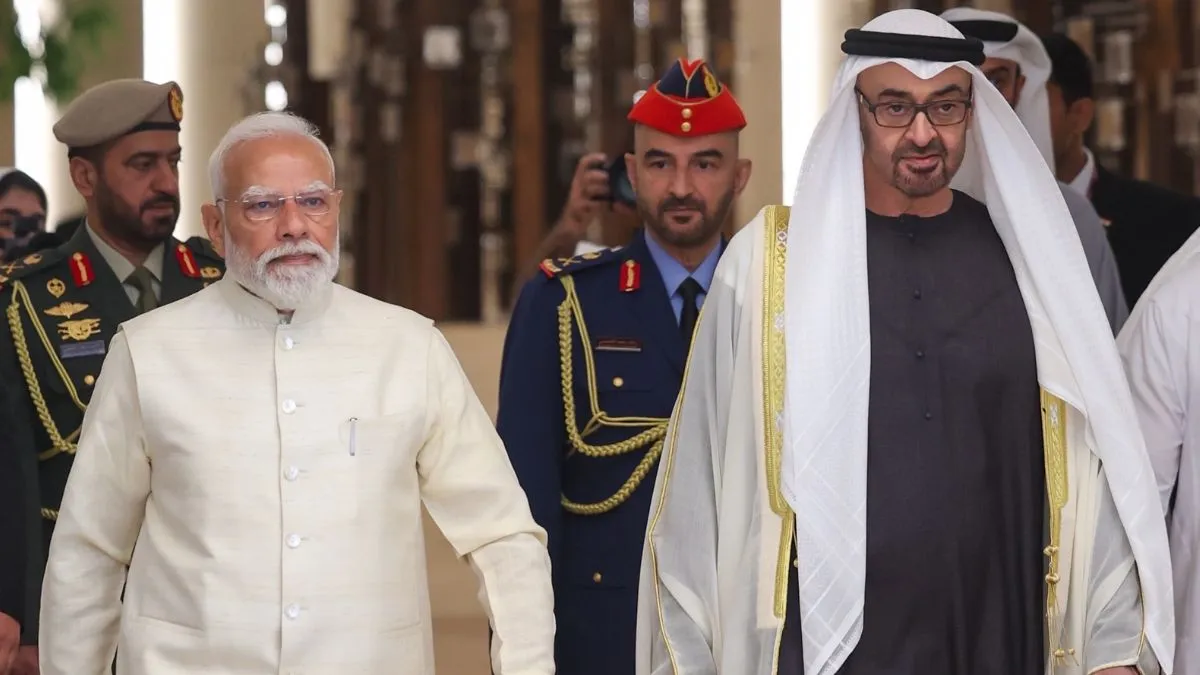
Prime Minister Narendra Modi is in the United Arab Emirates (UAE) during his six-day tour. PM Modi, during his around four-hour stay in the Gulf nation, held wide-ranging talks with President Sheikh Mohamed bin Zayed Al Nahyan. The two countries have signed a memorandum of understanding (MoU) regarding Strategic Petroleum Reserves. An agreement was reached concerning the long-term supply of Liquefied Petroleum Gas (LPG), and an MoU was signed for the establishment of a Ship Repair Cluster at Vadinar in Gujarat.
Pacts on LPG, strategic oil reserves to cushion US-Iran war impact
Amid the ongoing tension in the Middle East due to the conflict between Iran and the United States, crude oil that India imports averaged USD 113-114 per barrel, a significant surge from USD 69 per barrel in February before the war in West Asia broke out.
Global crude oil prices have surged more than 50 per cent since US-Israeli strikes on Iran on February 28 and Tehran’s subsequent retaliation disrupted energy flows through the Strait of Hormuz, a key artery for global oil shipments.
In this backdrop, the strategic petroleum reserves deal with the UAE holds significance as it has key oil export terminals and storage infrastructure in Fujairah, which sits outside the Strait of Hormuz on the Gulf of Oman. The deal will help the country get crude directly from terminals that bypass chokepoints.
Indian Strategic Petroleum Reserve Limited (ISPRL), a Government of India Special Purpose Vehicle, has established Strategic Petroleum Reserves (SPR) facilities with a total capacity of 5.33 Million Metric Tonnes (MMT) at 3 locations, namely – Vishakhapatnam, Mangaluru and Padur. In the event of a total supply blockade, this reserve can meet India’s massive fuel requirements for approximately 9 days.
In addition to the government SPR, Indian Oil Marketing Companies (OMCs) hold commercial reserves. Combined with the SPR, India’s total emergency storage can theoretically sustain the nation for roughly 74 days.
In 2028, the UAE’s Abu Dhabi National Oil Company entered into an agreement to store over 5 million barrels of crude oil reserves in ISPRL’s facility in Mangaluru.
While the UAE retains commercial ownership, India has the “first right of refusal” in the event of a severe global supply shock.
60 days of crude oil rolling stock
The Informal Group of Ministers (IGoM) was informed on May 11 that India has 60 days of crude oil, 60 days of Natural Gas and 45 days of LPG rolling stock. The IGoM was informed that the country is secure, and there is no shortage of any petroleum product, even as most other nations have taken emergency measures to dramatically reduce domestic consumption.
Leveraging UAE’s Exit from OPEC
The UAE recently exited from the Organization of the Petroleum Exporting Countries (OPEC), and is now free from the oil cartel’s production limits, which are set primarily by Saudi Arabia. It can ramp up crude oil production, and the deal means increased exports to India.