

Saving Seeds, Saving Futures: NE India’s Quiet Agricultural Revolution
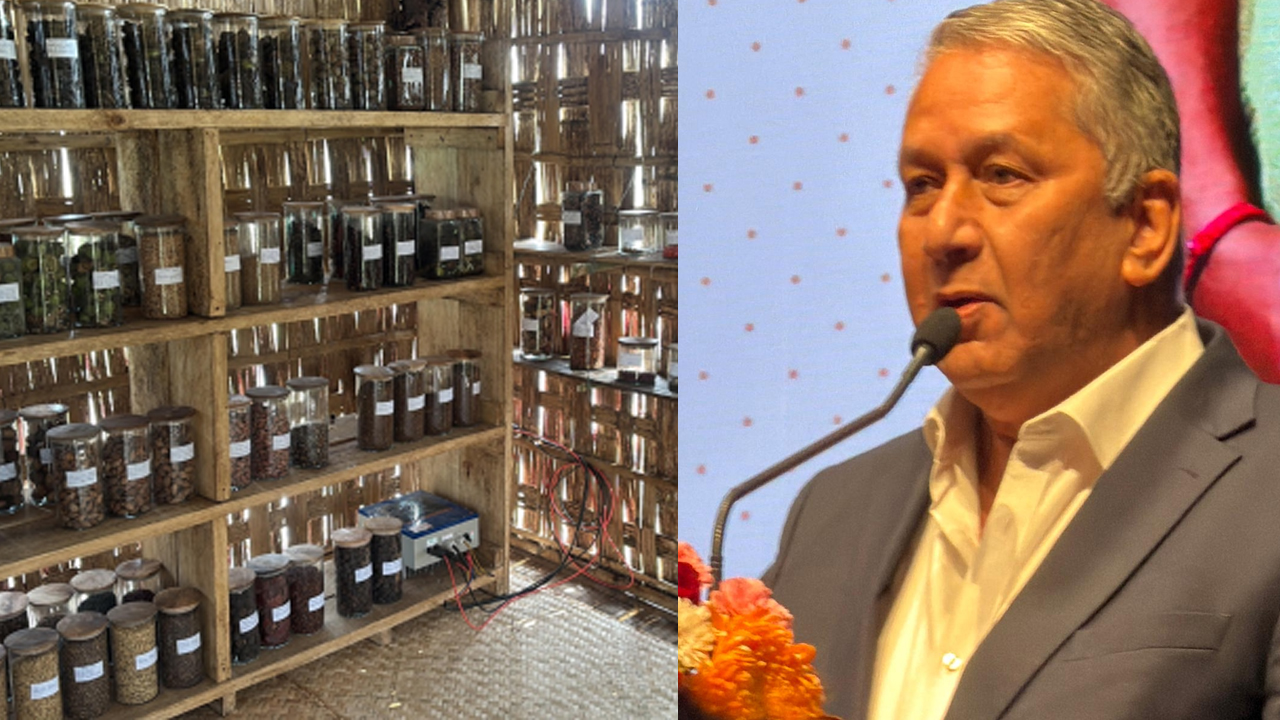
In the floodplains and foothills of Assam, a quiet but powerful agricultural practice continues to sustain livelihoods and ecosystems community seed banking. Experts and grassroots leaders are now highlighting its growing importance in ensuring food security and climate resilience.
Ranjit Barthakur, founder of Balipara Foundation, recently underscored how traditional seed-saving practices among farmers reflect a deep-rooted agricultural intelligence often overlooked by modern systems.
Recalling an experience from Sonitpur district, Barthakur described how a farmer once showed him a handful of rice grains uneven and imperfect. The best seeds, the farmer explained, had already been set aside for the next sowing season. “This simple act reflects a long-term vision, where sustainability takes precedence over immediate profit,” Barthakur noted.
A Living Tradition of Resilience
Across Northeast India, particularly in the Eastern Himalayan region where over 80 percent of farmers are smallholders, seed saving is not merely a tradition but a survival strategy. Farmers preserve diverse crop varieties rice tolerant to erratic monsoons, millets suited to acidic soils, and multipurpose legumes ensuring adaptability in a changing climate.
These seeds, experts say, carry generations of knowledge, encoding responses to floods, droughts, pests, and shifting weather patterns.
Growing Concerns Over Dependency
However, the increasing shift toward hybrid seeds is raising concerns. While such seeds often promise higher yields initially, they require specific inputs such as fertilizers, pesticides, and irrigation. Over time, this creates dependency and reduces farmers’ autonomy.
With climate variability intensifying, these input-heavy systems are proving vulnerable, leaving farmers exposed to rising costs and uncertain returns.
Community Seed Banks: A Strategic Solution
Community seed banks are emerging as a crucial alternative. Functioning as decentralized repositories, they preserve local seed diversity while also maintaining traditional knowledge about planting cycles and crop behavior.
“These seed banks are not relics of the past they are infrastructures of resilience,” Barthakur emphasized.
By enabling farmers to access climate resilient varieties some drought-resistant, others tolerant to excess rainfall seed banks provide a flexible and localized response to environmental uncertainty.
Beyond Agriculture: Restoring Dignity and Sovereignty
Beyond ecological benefits, seed banks are also restoring farmer autonomy. Seed sovereignty—the ability to save, use, and exchange seeds empowers farmers to make independent decisions, reducing reliance on external markets.
Experts warn that industrial agriculture models, often driven by patented seeds and monoculture practices, risk undermining both ecological balance and farmer independence.
Local Efforts in Assam
Initiatives such as the community seed bank in Kartick Sapori, Assam, demonstrate how localized efforts can safeguard biodiversity while strengthening rural resilience.
The Way Forward
As global conversations around food security intensify, experts argue that solutions must go beyond centralized systems. Instead, strengthening local knowledge systems and supporting community-led initiatives could hold the key.
“The answers already exist within communities,” Barthakur said. “What is needed is the willingness to recognize, support, and learn from them.”