

West Asia war’s impact may continue for a long time; govt fully alert: PM Modi in Rajya Sabha
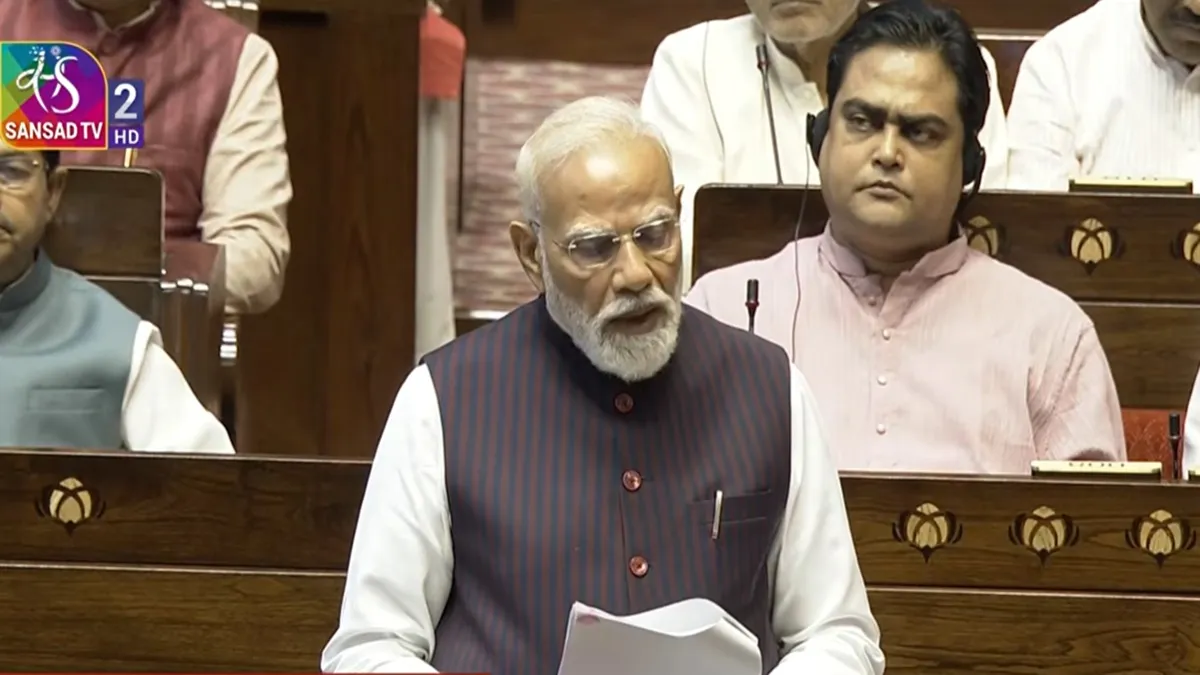
Prime Minister Narendra Modi on Tuesday addressed the Rajya Sabha to brief members on the developments in West Asia and their potential impact on India. Calling the developments “worrisome”, he said the impact of the conflict may persist for a long time. He also added that the government remains fully vigilant and is taking all necessary measures to safeguard India’s interests. He also said that the ongoing war has disrupted India’s trade routes. He briefed the House on the government’s preparedness to handle a potential energy crisis, stating that the ongoing war in the region has become a matter of global concern. The Prime Minister’s address in the Upper House during the ongoing Budget Session of Parliament comes a day after he apprised the Lok Sabha over the situation and the steps taken by his government for the safety of the people of the country.
Speaking further, PM Modi said the conflict is affecting the supply of petrol, diesel and gas worldwide. “India is in constant touch with all nations that are either involved in the war or affected by it…India has urged all sides to halt hostilities and work towards reducing tensions in the region. The war has caused a serious energy crisis in the world. For India too, this situation is concerning… The war has impacted our trade routes… With this, the routine supply of petrol, diesel, gas and fertilisers has been affected,” he added.
Two rounds of talks with West Asian leaders
The Prime Minister said India has also remained in close communication with the United States. He informed the House that he has held two rounds of conversations with leaders of West Asian nations. PM Modi noted that ship movement through the Strait of Hormuz has become increasingly difficult. Calling it one of the world’s most crucial maritime routes, he stressed that India is making every effort to ensure uninterrupted supplies of oil, gas and fertilisers.
Global energy crisis deepens
PM Modi further pointed out that it has been more than three weeks since the conflict began in West Asia, and the war has triggered a severe energy crisis worldwide. He said the situation is worrying for India as well, with trade routes disrupted and regular supplies of petrol, diesel, gas and fertilisers affected. “About 1 crore Indians live and work in the Gulf countries… Safeguarding their life and livelihoods is a matter of great concern for India… Several ships are stuck in the Strait of Hormuz… Indian crew members are stuck on those ships in large numbers… This too is a cause of major concern for India… In such a difficult situation, it is important that India’s Upper House sends out a united voice of peace and dialogue,” PM Modi added.
PM on the evacuation of Indian citizens
The Prime Minister said that India is prioritising the safety of its citizens during the West Asia conflict, noting that over 3,75,000 Indians have been safely evacuated so far, including more than 1,000 from Iran, while urging all sides to seek a peaceful resolution. “Any threat to human life in this war is not in the interest of humanity, so India is making constant efforts to encourage all sides to reach a peaceful solution as soon as possible. In times of crisis, the safety of Indians both in the country and abroad is our top priority. Since the war began, more than 3,75,000 Indians have safely returned to India. From Iran alone, more than 1,000 Indians have returned safely so far, including over 700 young people who were studying medicine. Our government is working with full sensitivity during this time of crisis,” he said.
West Asia war
The ongoing conflict in West Asia has entered its fourth week, disrupting trade routes through the Strait of Hormuz. Tensions escalated following the killing of 86-year-old Iran’s Supreme Leader, Ayatollah Ali Khamenei, in joint military strikes by the US and Israel on February 28. In retaliation, Iran targeted Israeli and US assets across several Gulf countries, causing further disruptions to the waterway and impacting international energy markets as well as global economic stability.