

Why Rajasthan Royals’ three Guwahati matches are a game changer for Assam
🖋️ Manashjyoti Goswami
The decision to host three Indian Premier League (IPL) matches of the Rajasthan Royals in Guwahati this year is more than just a scheduling move it is a significant milestone for Assam’s sporting landscape, economy, and identity as an emerging cricket hub. With the Indian Premier League continuing to expand its footprint across India, Guwahati’s inclusion as a key venue reflects both its growing infrastructure and the region’s rising importance in Indian cricket.
The Matches That Matter
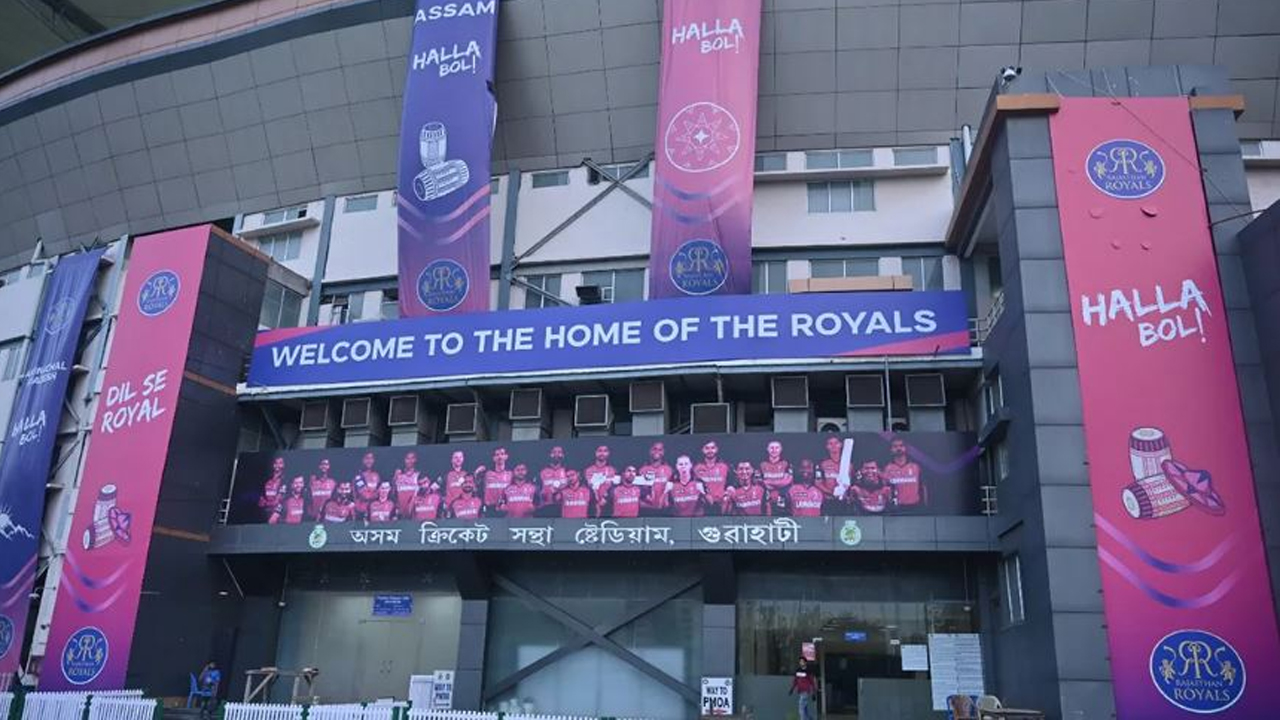
According to the IPL 2026 schedule, Guwahati’s Barsapara Cricket Stadium will host three Rajasthan Royals home matches in the first phase of the tournament:
- March 30: Rajasthan Royals vs Chennai Super Kings
- April 7: Rajasthan Royals vs Mumbai Indians
- April 10: Rajasthan Royals vs Royal Challengers Bengaluru
These fixtures are particularly significant because they feature some of the biggest teams and players in world cricket. Stars like MS Dhoni, Rohit Sharma, and Virat Kohli are expected to draw massive crowds, offering fans in the Northeast a rare opportunity to witness elite level cricket live.
Notably, Rajasthan Royals have chosen Guwahati as a secondary home venue and will play their first three home games here before moving to Jaipur later in the season.
Boost to Assam Cricket Infrastructure
Hosting IPL matches demands world-class infrastructure, and repeated hosting strengthens local capacity. The Barsapara Stadium, already one of the premier cricket venues in the Northeast, benefits immensely from IPL level upgrades ranging from pitch quality and drainage systems to broadcast facilities and crowd management.
Each match acts as a “stress test” for the stadium’s capabilities. With three high profile games in quick succession, the Assam Cricket Association (ACA) gains valuable operational experience. Over time, this enhances the venue’s chances of hosting more international matches, including ICC tournaments.
Moreover, the exposure encourages further investment in cricket infrastructure across Assam, including practice facilities, academies, and grassroots development programs.
Economic and Tourism Impact
The economic ripple effect of hosting IPL matches is substantial. Hotels, transport services, restaurants, and local vendors all benefit from the influx of fans, teams, media personnel, and officials.
With three matches scheduled, Guwahati is expected to witness a surge in tourism over a short period. Fans traveling from across Assam and neighboring states and even from other parts of India will contribute to increased occupancy rates and local spending.
The timing of the matches also aligns with peak IPL enthusiasm, ensuring strong attendance and commercial activity. The cumulative economic benefit of three matches is significantly higher than a single fixture, making this a strategic win for the state.
Strengthening Assam’s Sporting Identity
For years, cricket in India has been concentrated in traditional hubs like Mumbai, Delhi, and Chennai. However, Guwahati’s consistent inclusion in IPL schedules signals a shift toward decentralization.
By hosting three matches, Assam positions itself not just as a peripheral venue but as a serious cricketing destination. This visibility helps in:
- Attracting future IPL matches and international fixtures
- Encouraging corporate sponsorships in regional cricket
- Building a strong fan base in the Northeast
The move also strengthens the emotional connection between fans and the IPL, making cricket more inclusive and geographically diverse.
Opportunities for Local Talent
One of the most significant long term benefits lies in talent development. Young cricketers in Assam and the Northeast get to observe top level professionals up close, gaining inspiration and exposure.
The presence of Rajasthan Royals, a franchise known for nurturing young talent, further enhances this opportunity. Assam players can interact with coaching staff, observe training methods, and aspire to higher standards.
Additionally, with Assam’s own cricketer Riyan Parag leading the Royals in IPL 2026, the connection becomes even stronger, inspiring a new generation of local players.
Media Exposure and Branding
Hosting IPL matches places Guwahati in the national and global spotlight. Each game is broadcast to millions of viewers worldwide, showcasing the city’s infrastructure, culture, and hospitality.
This kind of exposure is invaluable for state branding. It positions Assam as:
- A capable host for major sporting events
- A tourism-friendly destination
- A growing center for sports development
For local media and digital platforms, including regional broadcasters, the matches provide content opportunities and audience growth.
Strategic Importance Despite Debate
While some critics have questioned Rajasthan Royals’ decision to shift multiple home matches away from Jaipur, the move clearly aligns with a broader IPL strategy of expanding into new markets.
In fact, the Board of Control for Cricket in India (BCCI) has fully supported the plan, confirming that three matches will be held in Guwahati as requested by the franchise.
Even logistical concerns, such as elections in Assam, have not affected the schedule, with authorities confirming that matches will proceed as planned.
A Long-Term Vision for Assam
The hosting of three IPL matches is not just a one-season event it is part of a long-term vision. By successfully organizing these matches, Assam strengthens its case for:
- More IPL fixtures in future seasons
- Hosting international bilateral series
- Becoming a permanent cricketing hub in Northeast India
The cumulative impact of infrastructure development, economic growth, and increased visibility will continue to benefit the state well beyond IPL 2026.
The arrival of Rajasthan Royals in Guwahati for three IPL matches represents a pivotal moment for Assam. From boosting infrastructure and tourism to inspiring young talent and enhancing the state’s global image, the benefits are wide-ranging and long-lasting.
As the cricketing world turns its attention to Barsapara, Assam has a unique opportunity not just to host matches, but to redefine its place on India’s sporting map.