

“Producing More Is Not Prosperity,” says Ranjit Barthakur at ATPA AGM
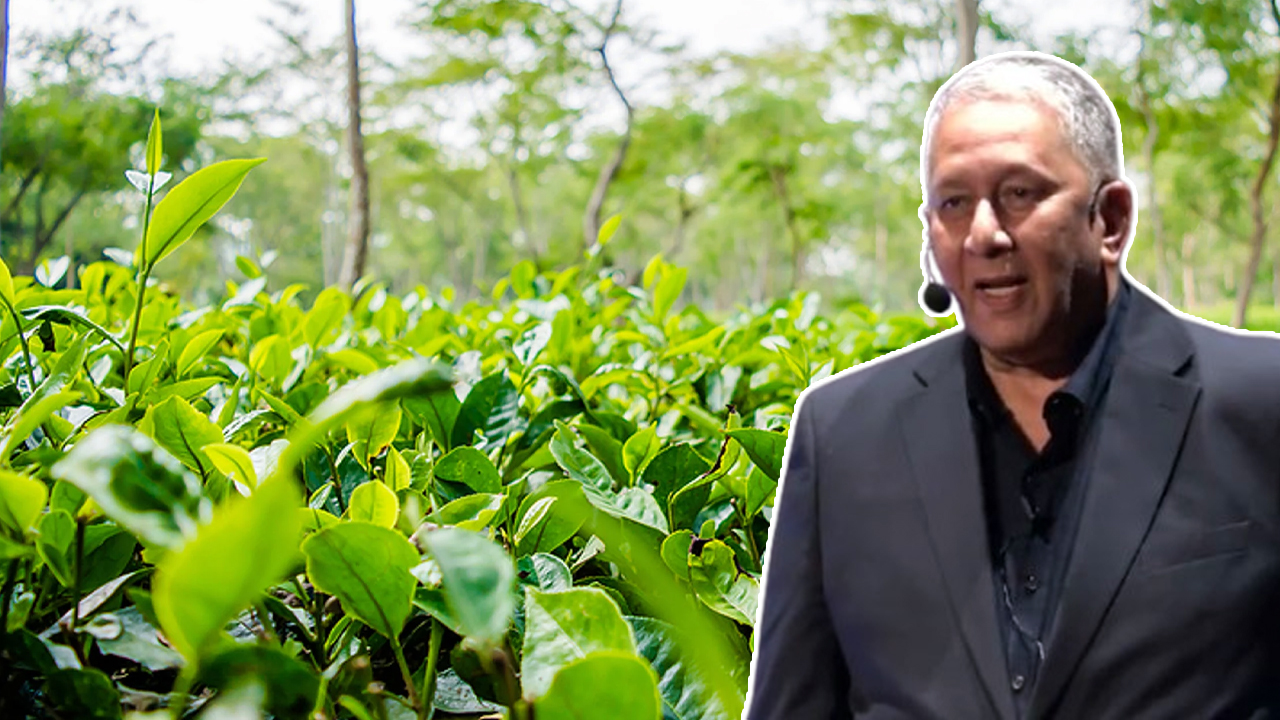
Calling for a decisive shift in mindset, conservationist and industry leader Ranjit Barthakur on Friday said Assam’s tea industry must move away from a volume-driven approach and focus instead on building sustainable value if it is to secure its future.
Addressing the 88th Annual General Meeting of the Assam Tea Planters’ Association (ATPA), Barthakur said the sector is facing a defining moment, nearly two centuries after indigenous tea was discovered in the Brahmaputra Valley. While Assam remains one of the world’s largest tea-producing regions, he cautioned that scale alone can no longer guarantee economic stability.
“The challenge before us is not relevance — it is economics,” Barthakur said, drawing attention to the growing disconnect between global tea production and price realisation.
He pointed out that global tea output has expanded dramatically over the last seven decades, rising from about 1.5 billion kilograms in 1950 to nearly 6 billion kilograms today. Prices, however, have not kept pace. “Despite a fourfold increase in production, real price realisation has stagnated and, in recent years, declined,” he said, describing the situation as an oversupply paradox that is squeezing margins across the value chain.
Barthakur noted that Assam, which contributes roughly half of India’s total tea production, has felt the pressure acutely over the past two years due to global oversupply, subdued demand and price volatility. “Producing more tea does not automatically translate into prosperity,” he warned.
Referring to structural changes within the industry, Barthakur said the rise of small tea growers, who now account for more than half of India’s tea output, has fundamentally altered the production landscape. With over 1.3 lakh small growers in Assam alone, he said the industry has evolved into a hybrid ecosystem, but pricing mechanisms, quality incentives and institutional frameworks have lagged behind this reality.
“If we do not bridge this gap, we risk destabilising incomes and undermining Assam’s reputation,” he said.
Barthakur stressed that rising costs — including labour shortages, energy expenses, logistics, compliance requirements and climate stress — are putting additional strain on producers. At the same time, he said future revenue growth will increasingly come from quality, consistency, provenance, traceability, premium and wellness-focused products, new formats such as ready-to-drink teas, and direct-to-consumer digital channels.
“The future lies in capturing more value per kilogram, not merely increasing output,” he said.
Highlighting the role of innovation, Barthakur said technology is no longer optional for the tea sector. Artificial intelligence, robotics and automation, he said, are already reshaping operations, from precision plucking and drone-based crop monitoring to sensor-driven fermentation and blockchain-enabled traceability.
“These are no longer distant concepts. They are practical tools that can improve efficiency, consistency and sustainability from plantation to cup,” he said, adding that automation can also help address labour shortages while ensuring quality control. He also underlined the importance of AI and IoT systems in mitigating human–animal conflict in tea landscapes, improving safety for both workers and wildlife.
Barthakur emphasised that transformation must place people at its centre. He called for greater investment in smart, eco-friendly worker housing, describing dignified living conditions as a cornerstone of long-term productivity and social stability. Such housing, he said, can also help estates optimise land use and free up space for alternative income-generating activities.
Turning to diversification, Barthakur said tea estates should be viewed as complex landscapes rather than single-crop factories. He highlighted opportunities in bamboo cultivation, biochar production, tea tourism, artisanal value chains and renewable energy as ways to unlock dormant land value while reducing dependence on volatile tea prices.
“Intelligent diversification can strengthen resilience without compromising tea cultivation,” he said.
On the role of institutions, Barthakur said research bodies, extension services and industry associations must work together more closely to navigate climate volatility and market shifts. Referring to ATPA’s own history, he said the association is well placed to act as a catalyst for change by convening stakeholders and piloting new models.
Concluding his address, Barthakur said Assam tea has heritage, scale and global recognition, but now needs institutional courage to transition from a production economy to a value economy. “The question is no longer whether Assam tea has a future,” he said. “The real question is who will own the value of that future — and how wisely it will be built.”