

October 2026 Records Highest Temperature in Recorded History, Raising Global Climate Concerns
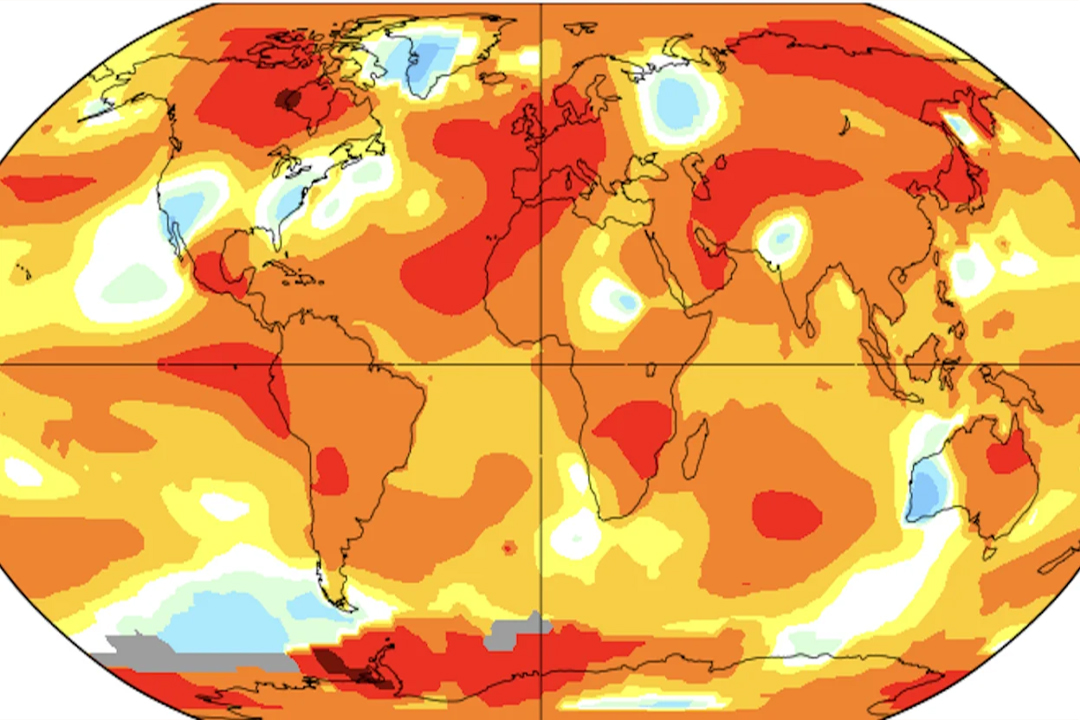
The world has witnessed another alarming climate milestone, with October 2026 emerging as the hottest October on record. Rising global temperatures driven by human activities, combined with an exceptionally strong El Niño phenomenon, have pushed the planet towards another dangerous climate threshold.
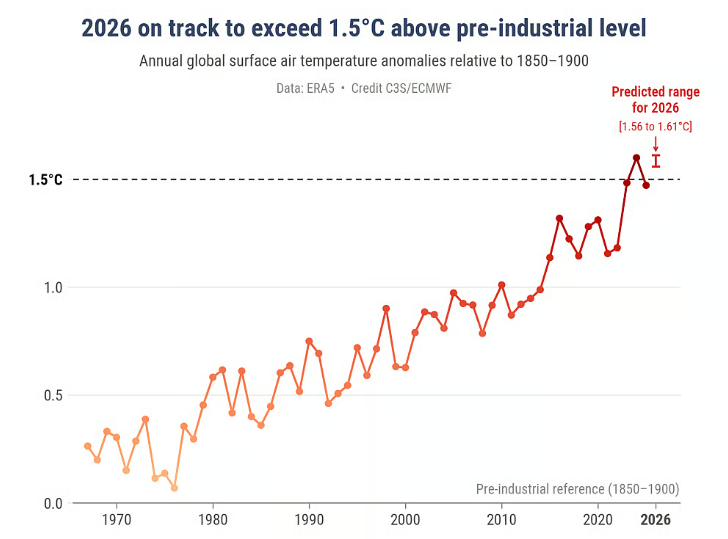
According to the latest report by the European Union’s Copernicus Climate Change Service (C3S), global warming is increasingly likely to exceed the 1.5°C threshold above pre-industrial levels in 2026.
The report revealed that the average near-surface air temperature across the globe reached 15.35°C in October. This was 0.9°C above the October average recorded between 1991 and 2020 and 1.75°C higher than the estimated pre-industrial average for the period 1850–1900.
Global temperatures had already crossed the 1.5°C threshold in August and September. With October recording a similar trend, the world has now experienced three consecutive months above this critical level. A similar occurrence was last recorded between February and April 2025.
Based on data available up to October, Copernicus estimates that the average global temperature in 2026 could be between 1.56°C and 1.61°C above pre-industrial levels. This raises the possibility of 2026 becoming the second-warmest year on record, with an 80 per cent probability. There is also a possibility that it could equal or even surpass the record set by 2024, currently recognised as the warmest year on record.
More concerningly, the average global temperature over the four-year period from 2023 to 2026 could exceed the 1.5°C threshold.
Ocean temperatures have also reached alarming levels. Excluding the polar regions, the average sea surface temperature across the world’s oceans climbed to 20.95°C in October, setting a new record for the month. It also surpassed the previous October record set in 2023.
Scientists believe that this year’s El Nino could be even stronger than the major El Nino events of 1982–83, 1997–98 and 2015–16. While human-induced greenhouse gas emissions have already contributed significantly to global warming, the powerful El Niño phenomenon is adding further pressure by pushing temperatures even higher.
Meanwhile, rainfall patterns across different parts of the world showed significant variations during October. Below-average rainfall was recorded across eastern North America, western and central-eastern Europe, western Russia, Siberia, western Asia, southern China and southern parts of Africa.
In contrast, above-average rainfall was reported in Alaska, parts of the southern United States, northern Mexico, large areas of Central Asia, parts of China and Korea, Chile, southern Argentina, southeastern Brazil, Madagascar, and western and central Australia.
The latest findings highlight the growing impact of climate change, with rising temperatures, warming oceans and increasingly unusual weather patterns posing serious challenges to ecosystems, agriculture and human livelihoods worldwide.