

Fresh Setback for Sonam Wangchuk as Ladakh Administration Issues School Closure Notice
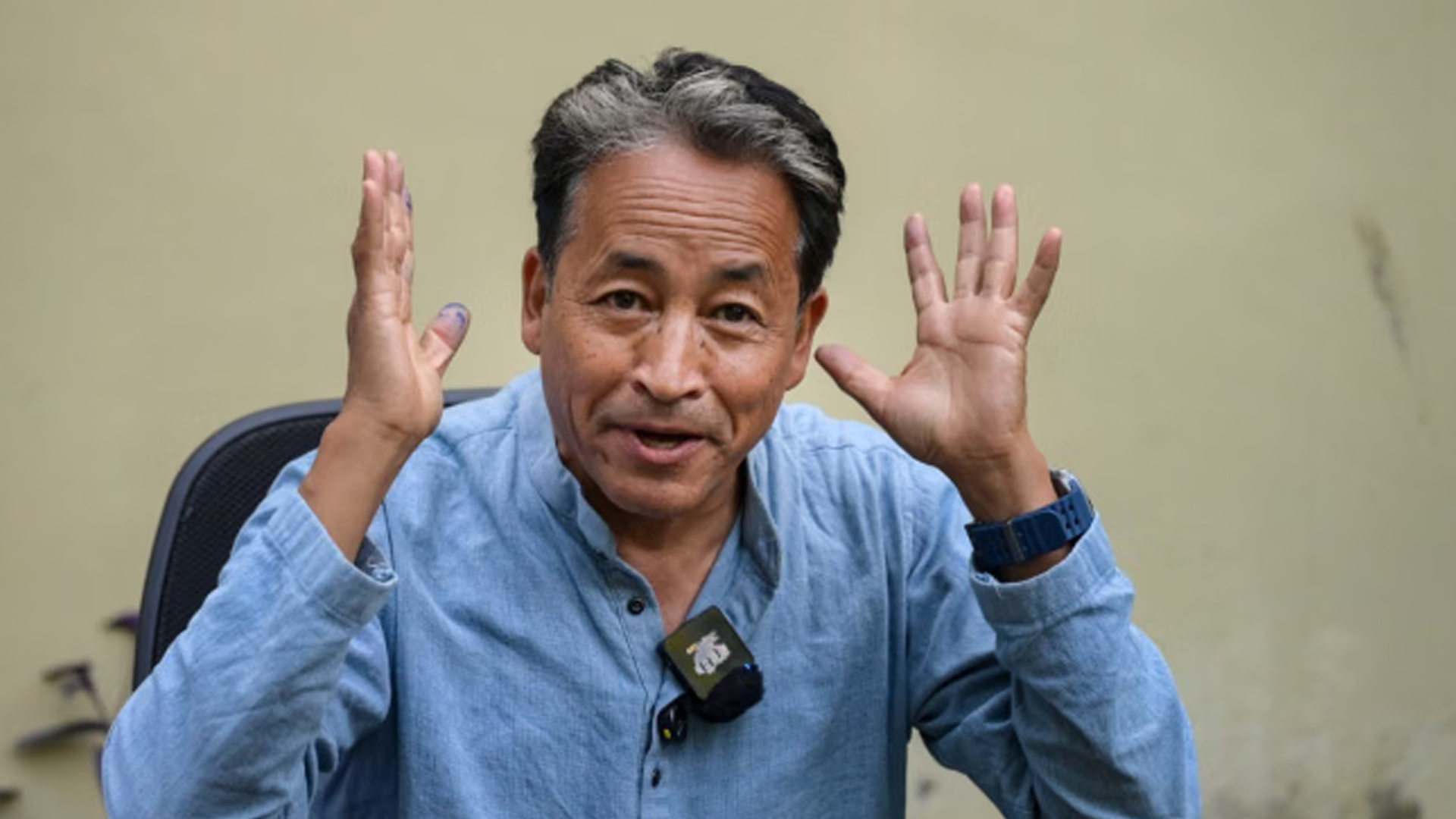
Climate activist and innovator Sonam Wangchuk has once again landed in a fresh confrontation with the Ladakh administration. This time, the administration has issued a notice directing his associated educational institution, Desert Flower School in Leh, to stop conducting classes and other activities, alleging that it began functioning without the necessary approvals.
The notice, issued by the Tehsildar of Leh, is addressed to Dr Gitanjali J Angmo, Wangchuk’s wife and the founder and CEO of the Himalayan Institute of Alternatives, Ladakh (HIAL). The administration has directed her to maintain the existing status quo and refrain from taking any steps that could affect the case pending before the High Court of Jammu and Kashmir and Ladakh.
According to the administration, Angmo had written to the Leh Deputy Commissioner on September 22, seeking a No Objection Certificate (NOC) or clearance for the proposed members of the managing committee of Desert Flower School at Phyang, which operates under the HIAL ecosystem.
However, officials alleged that classes and other activities had already commenced at the school without obtaining the required consent or approval from the concerned authorities.
Land Allotment Dispute Behind the Latest Notice
The latest notice comes amid an ongoing legal dispute between HIAL and the Ladakh administration over the allotment of land to the institute.
In May 2018, HIAL was allotted 1,076 kanals and one marla of land at Phyang Thang for establishing an alternative university focused on sustainable development in the Himalayan region. The land was proposed to be leased for 40 years, subject to certain conditions.
However, on August 21, 2025, the Ladakh administration cancelled the allotment, alleging that HIAL had neither completed the required lease formalities nor established the university for which the land had originally been allotted.
Challenging the decision, HIAL approached the High Court of Jammu and Kashmir and Ladakh.
In September 2026, the High Court restrained the administration from creating third-party rights over the disputed land while hearing the petition. However, the interim order did not overturn the cancellation of the land allotment.
Wangchuk’s Contributions to Sustainable Development
Sonam Wangchuk is widely recognised for his innovative work in education, climate adaptation and sustainable development, particularly in the challenging geographical and climatic conditions of Ladakh.
One of his best-known innovations is the Ice Stupa, an artificial glacier system designed to store excess winter water in the form of cone-shaped ice structures. The stored ice gradually melts during spring, helping farmers tackle water shortages during the crucial agricultural season.
He has also promoted passive solar mud buildings, which use traditional earthen architecture, thermal mass and insulation to maintain indoor warmth without relying heavily on electricity or fossil fuels.
Through HIAL, Wangchuk has sought to promote alternative education, sustainable technologies and solutions tailored to the needs of Himalayan communities.
Ongoing Tensions Over Ladakh’s Rights and Environment
Apart from his educational and environmental initiatives, Wangchuk has been an active voice in campaigns demanding constitutional safeguards for Ladakh, protection of local land rights and environmental preservation.
Wangchuk has alleged that the land dispute is being used to target him because of his activism in the region. The administration, however, has maintained that its decision to cancel the land allotment was based on the institute’s alleged failure to fulfil the conditions of the original allotment.
With the latest notice targeting activities at Desert Flower School, the dispute between HIAL and the Ladakh administration has entered another phase, raising fresh questions over the institute’s future and the broader debate surrounding education, environmental protection and local rights in Ladakh.