

Sonam Wangchuk Backs Arunachal Protesters Over Siang Dam Project, Seeks President Droupadi Murmu’s Intervention
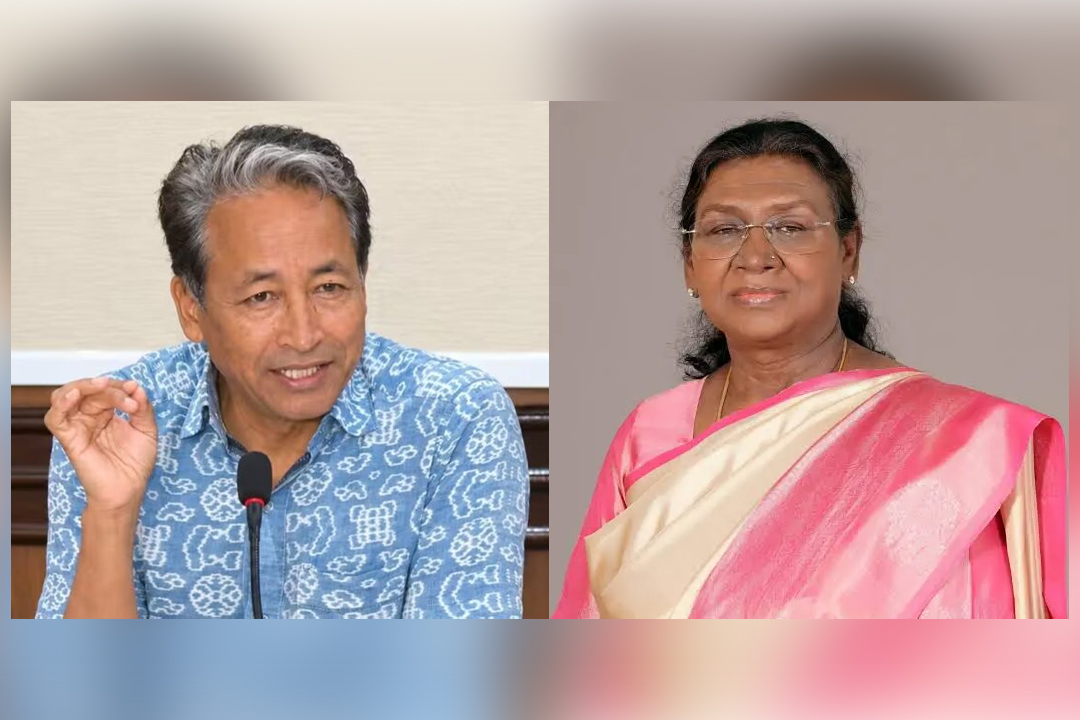
Amid protests and growing tensions over the proposed Siang Upper Multipurpose Project in Arunachal Pradesh’s Siang Valley, environmental activist Sonam Wangchuk has extended his support to the protesters. He has written an urgent letter to President Droupadi Murmu, urging her to intervene in the situation.
Wangchuk has particularly called for the protection of the rights, land and environment of indigenous tribal communities, including the Adi people, who have been opposing the proposed project. He also described allegations portraying people from border communities as “anti-national” or “foreign-funded” as unfortunate.
In his letter to the President, Wangchuk drew parallels between the situation in Arunachal Pradesh’s Siang Valley and the ongoing movement in Ladakh. He pointed out that the people of Ladakh have also been demanding constitutional safeguards under the Sixth Schedule to protect their fragile ecology, ancestral lands and cultural identity.
According to Wangchuk, the Siang River is not merely a river for the Adi community but is regarded as a mother. The community refers to it as ‘Aane Siang’, meaning ‘Mother Siang’. He said the emotional and cultural bond that the people of Ladakh share with their mountains, glaciers and rivers is similar to the relationship the Adi community shares with the Siang River.
Expressing concern over the recent developments in the Siang Valley, Wangchuk alleged that a large number of security personnel had been deployed in the region. He also claimed that young protesters had been arrested, villagers were facing restrictions on their movement and intimidation, and allegations of police excesses against elderly villagers had emerged.
Wangchuk also criticised attempts to portray those opposing the project as anti-national or foreign-funded simply for raising concerns. He pointed out that the people of Ladakh and Arunachal Pradesh had always stood firmly with the country during wars and border crises. These communities, he said, have consistently supported the Indian Armed Forces and stood shoulder to shoulder with them even under extremely difficult circumstances.
He further warned that the trust and cooperation of local communities are among the greatest strengths of India’s national security. Such allegations, he argued, could weaken rather than strengthen the country’s security.
In his letter, the environmental activist also cited the devastating glacial lake outburst flood (GLOF) in the Teesta River basin of Sikkim to highlight the potential risks associated with large-scale projects in mountain river systems. He stressed the need for extreme caution while implementing such projects, considering their environmental, geological and seismic implications.
Wangchuk placed four specific demands before the President. These include the withdrawal of excessive security forces from civilian areas of the Siang Valley, the release of people detained for peaceful protests, withdrawal of unjustified criminal cases and an independent investigation into allegations of police excesses.
He also demanded that all coercive measures and irreversible project-related activities be halted until meaningful consultations are held with the affected indigenous communities. Furthermore, he called for an independent and comprehensive assessment of the project’s environmental, geological, seismic and social impacts.
Meanwhile, Arunachal Pradesh Chief Minister Pema Khandu clarified on Monday that neither the Central Government nor the state government had taken any decision regarding the construction of the Siang Upper Multipurpose Project. He stated that the ongoing exercise was limited to the preparation of a pre-feasibility report.
The Chief Minister said that the construction of a dam was not being discussed at this stage. He also assured that open discussions, transparency and public consultations would be ensured before any final decision was taken.
It may be mentioned that several people were arrested following incidents of violence and vandalism during a protest against the project on October 23, according to the state government. While acknowledging that expressing dissent is a democratic right, Chief Minister Pema Khandu said that strict legal action would be taken against violence, road blockades and attacks.
Through his letter, Sonam Wangchuk reiterated that protecting the Himalayan ecosystem and respecting the rights of border communities are not contrary to national development or national security. Rather, he emphasised that both are essential for the country’s progress and security.