

ED strengthens cross-border asset tracking and PMLA enforcement at Guwahati conference
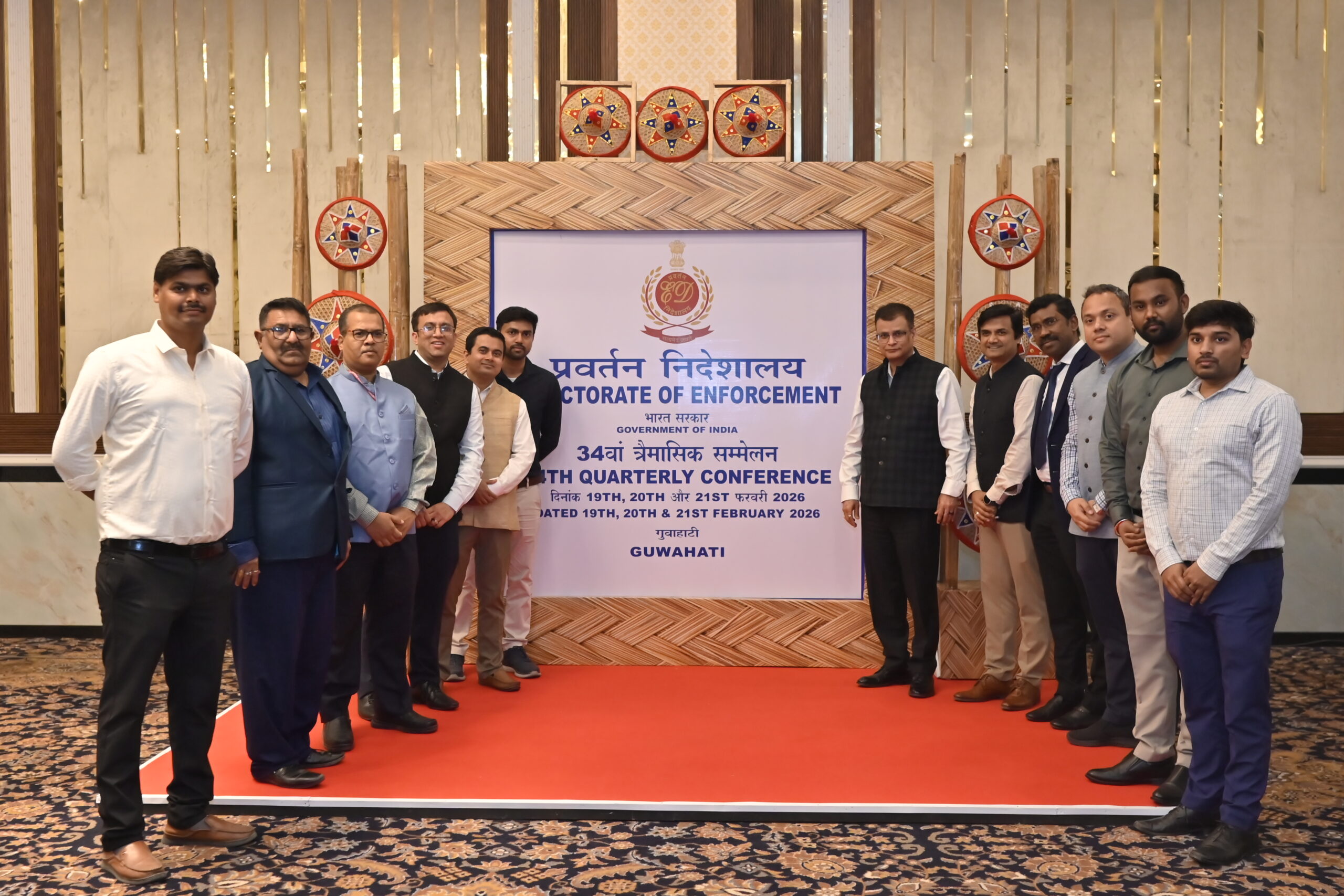
The Directorate of Enforcement convened its 34th Quarterly Conference of Zonal Officers (QCZO) in Guwahati, Assam, from February 19 to 21, 2026, marking a strategically significant gathering ahead of the close of the financial year. Chaired by the Director of the Enforcement Directorate, the three-day conference brought together Special Directors, Additional Directors, Joint Directors, Deputy and Assistant Legal Advisors, and senior officers from headquarters and field formations across the country.
Holding the conference in Guwahati underscores the growing operational importance of the North Eastern Region. Over the past two to three years, the ED has expanded its presence in the region with six new offices and is working towards operationalizing an office in Aizawl. The region has witnessed intensified enforcement actions, particularly in cybercrime and drug trafficking cases, given its proximity to the Myanmar and Bangladesh borders.
The Guwahati conference assumed added importance as it was the last quarterly review before the end of the financial year. Officers were directed to focus on meaningful achievement of targets, logical conclusion of investigations, timely filing of prosecution complaints, and ensuring that attachments and penalties are legally sustainable. The target of filing 500 Prosecution Complaints during the current financial year was reiterated, with field formations urged to identify mature cases and minimize avoidable delays. Plans for an enhanced target in the next financial year were also discussed to reduce the lifecycle of investigations to one to two years, except in exceptionally complex cases.
A key theme of the deliberations was data integrity and consolidation. Zonal Heads were instructed to ensure accurate, reconciled, and real-time data entry on the internal case management system, particularly relating to ECIRs, attachments, prosecution complaints, confirmations, and penalties. Weekly reviews have been mandated to ensure statistical reconciliation by March 31, 2026.
The conference reviewed progress in closure of ECIRs and the status of attached properties under the Prevention of Money Laundering Act (PMLA). Officers were reminded that while significant statutory powers are available under PMLA, these must be exercised with caution, fairness, and accountability. The issuance of summons and statutory notices, it was emphasized, should be based on clear necessity and proper application of mind.
Several priority areas were identified for focused action across Zones. These include tracking foreign assets parked in jurisdictions such as Dubai and Singapore; investigating professional money laundering channels disguised as trade transactions; examining potential misuse of the Insolvency and Bankruptcy Code (IBC); tackling digital arrest scams and cyber-enabled financial fraud; dismantling illegal betting and unregulated online gaming networks; targeting hawala linkages and financial networks of drug traffickers; probing share market manipulation schemes; and scrutinizing foreign funding channels potentially linked to anti-national activities.
International cooperation emerged as a major focus area. Officers were encouraged to make full use of Mutual Legal Assistance Treaty requests, Letters Rogatory, extradition processes, and Interpol channels through BHARTAPOL, including issuance of Colour Notices where appropriate. The importance of intelligence exchange through the Egmont framework and asset tracing networks such as ARIN-AP and the GlobE Network was also highlighted to strengthen cross-border investigations and asset recovery.
The conference also featured thematic presentations by national agencies to enhance inter-agency coordination. The Insolvency and Bankruptcy Board of India (IBBI) elaborated on the IBC–PMLA interface, including provisions relating to moratorium, ineligibility, and avoidance transactions. The Financial Intelligence Unit-India (FIU-IND) presented updates on dissemination of Suspicious Transaction Reports and the FINNET 2.0 platform, which integrates banking, capital markets, and virtual digital asset data. The Indian Cyber Crime Coordination Centre (I4C) highlighted emerging cybercrime trends, particularly digital arrest scams, while the Narcotics Control Bureau (NCB) discussed narcotics trafficking risks in the North East and emphasized parallel financial investigations to dismantle drug syndicates.
Administrative and infrastructure strengthening also formed part of the discussions. The ED reported progress in land acquisition, hiring of new office premises, and infrastructure development in cities including Shillong, Dehradun, Raipur, Chennai, and Hyderabad as part of its long-term institutional capacity-building efforts.
The conference concluded with a reaffirmation of the Enforcement Directorate’s commitment to robust enforcement of laws relating to money laundering, foreign exchange violations, and serious economic offences. The deliberations at Guwahati are expected to enhance inter-zonal coordination, sharpen investigative priorities, reinforce data discipline, and ensure accountable closure of the financial year.