

Preparing to Cross the Sea! Apapang and Alang Set for Another Epic 14,000-km Journey to Africa
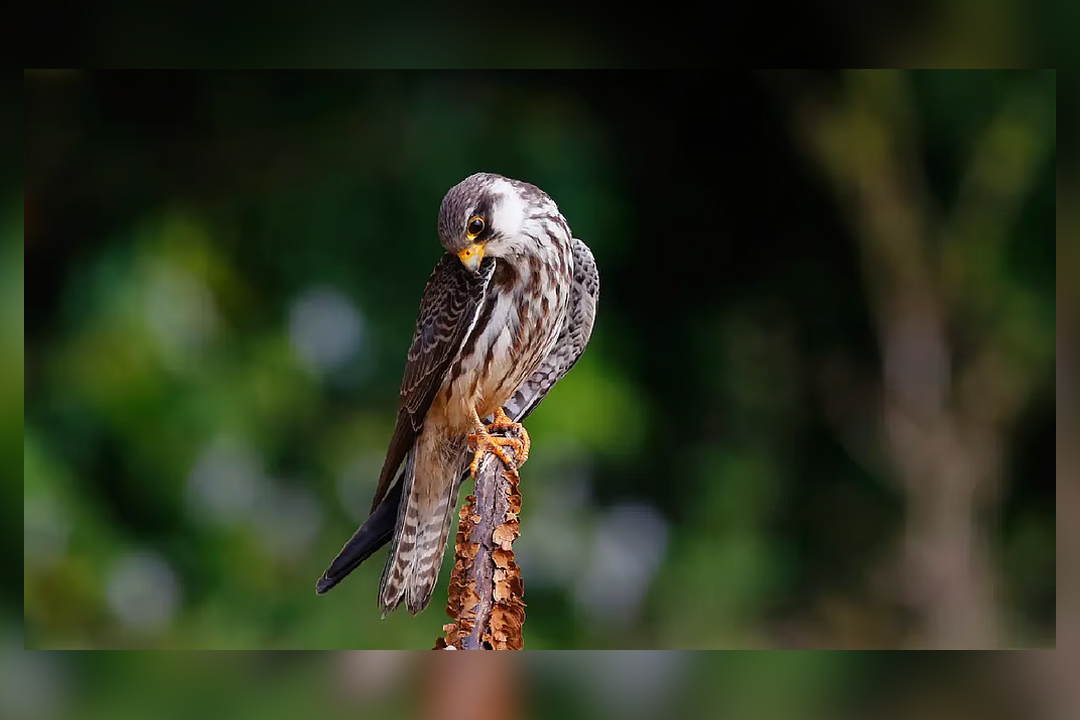
India serves as a crucial stopover for the migratory Amur falcons as the two satellite-tagged birds prepare for their next long-distance flight across the Arabian Sea.
The migratory Amur falcons, known for their extraordinary long-distance journeys, have once again returned to India ahead of their onward journey to Africa. Apapang and Alang, two satellite-tagged Amur falcons, have arrived in Tamenglong, a picturesque hill district in Manipur, sparking renewed interest among wildlife enthusiasts and conservationists.
The movements of the two birds have been tracked by scientists at the Wildlife Institute of India (WII), Dehradun, with the help of satellite transmitters fitted to their bodies. Apapang is a male Amur falcon, while Alang is a female.
Their remarkable journey across continents resembles a fascinating tale of migration, as the two birds prepare to cross vast stretches of land and ocean. Scientists have been monitoring their movements over the past year through signals transmitted by the satellite tracking devices.
In October 2025, the birds began their journey from distant Siberia and travelled to India before embarking on an uninterrupted five-day flight across the Arabian Sea to reach Africa. Their extraordinary journey attracted worldwide attention. The migratory cycle, which began in October 2025, concluded in May 2026, with the flock travelling across 23 countries in Asia and Africa.
Barely six months after completing their previous migration, the birds have begun their journey towards Africa once again. Manipur and Nagaland are among their first major stopover destinations in India.
Last year, WII scientists fitted satellite transmitters on three Amur falcons named Apapang, Alang and Ahu. However, the transmitter attached to Ahu is believed to have fallen off, making it impossible for scientists to track the bird’s current movements.
The migratory route of the Amur falcons, stretching over 11,000 kilometres from Siberia through China and India to Africa, is known among ornithologists as the East Asian–East African Flyway.
During summer, the birds prefer Siberia and northeastern China as their breeding grounds. As winter approaches and snowfall begins in Siberia around September and October, they start moving southwards from their breeding habitats in northeastern Asia.
After crossing Chinese airspace, these small birds of prey arrive in Northeast India. Measuring just 27–29 centimetres in length and weighing approximately 130 grams, Amur falcons undertake one of the most remarkable migratory journeys in the avian world.
For these migratory birds, India is not merely a transit destination but also a vital stopover where they replenish their energy before undertaking the challenging ocean crossing.
This year, nearly 1.5 lakh Amur falcons have arrived in Manipur and Nagaland so far. According to Suresh Kumar, a scientist at the Wildlife Institute of India, which is involved in a Central Government initiative for monitoring and conserving migratory birds, the temporary halt of Apapang and Alang in the forested hills of Manipur and Nagaland is an essential part of their preparation for the next phase of migration.
“At present, the birds are feeding on termites in the region and accumulating fat reserves in their bodies. This stored energy will be crucial for the next and most challenging phase of their migration, which is expected to begin shortly,” he explained.
According to Kumar, the migratory route from Manipur to Somalia covers approximately 6,000 kilometres, of which nearly 3,000 kilometres lies over the Arabian Sea. During this long and exhausting stretch, the birds have virtually no opportunity to stop and rest.
Leaving the safety of land and flying continuously over vast stretches of open sea is considered one of the most extraordinary aspects of bird migration.
Since 2018, more than a dozen Amur falcons have been fitted with tracking devices through a joint initiative of the Tamenglong Forest Division in Manipur and the Wildlife Institute of India.
On November 11, 2025, WII scientists fitted radio transmitters on three Amur falcons at Chiuluan village in Tamenglong. The birds were named Apapang, Alang and Ahu after three villages located near their roosting sites in the district.
Union Environment, Forest and Climate Change Minister Bhupender Yadav has also shared photographs of Apapang and Alang on social media, announcing their return to Manipur.
Last year, the two birds made headlines by completing the challenging journey from India to Somalia in just five days. Now, as they prepare to repeat this extraordinary feat, scientists will closely monitor the electronic signals transmitted by their satellite devices.
For now, two tiny dots on the scientists’ tracking screens are preparing to embark on another incredible journey across the Arabian Sea, heading towards the African continent.