

Myanmar Held Responsible for Rohingya Genocide: ICJ Delivers Historic Verdict After Seven-Year Legal Battle
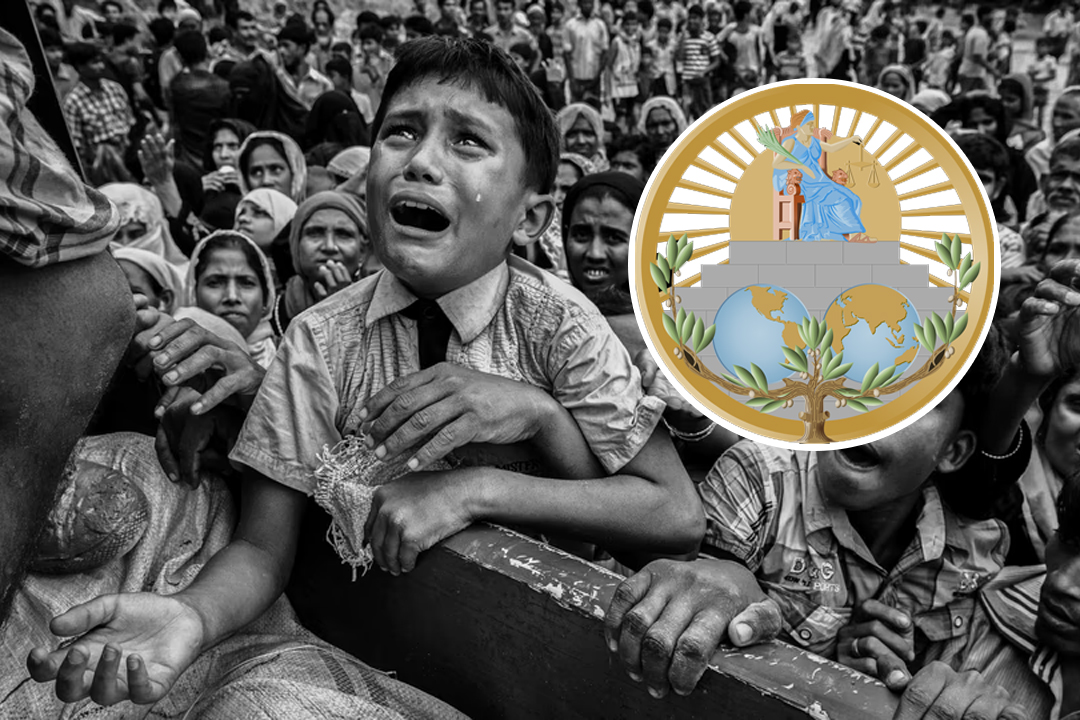
In a landmark ruling, the International Court of Justice (ICJ) has found Myanmar responsible for committing genocide against the Rohingya minority in northern Rakhine State. The verdict comes after a seven-year legal battle initiated by The Gambia in 2019.
After nearly three hours of reading out the judgment, ICJ President Judge Yuji Iwasawa announced that the court had reached its decision by a 9-6 majority, finding Myanmar responsible for genocide against the Rohingya community in northern Rakhine State.
In an unprecedented ruling, the UN’s highest court has, for the first time, found a state responsible for committing genocide.
According to the evidence cited in the judgment, Myanmar’s military killed more than 10,000 Rohingya people. The court also highlighted widespread sexual violence against women, brutal attacks on children and assaults on members of the minority community who attempted to flee to Bangladesh.
The case relates to the military operations launched against the Rohingya population in 2017, when Myanmar’s military was accused of carrying out widespread atrocities, including mass killings, rape and other forms of violence.
At the time, the National League for Democracy (NLD), led by pro-democracy leader Aung San Suu Kyi, was in power in Myanmar. However, in February 2021, a military coup led to the overthrow of her government. Suu Kyi and several other elected representatives were detained, while many others fled the country.
Allegations of continued persecution and violence against the Rohingya have persisted under military rule. Hundreds of thousands of Rohingya refugees continue to live in camps in Bangladesh after fleeing Myanmar.
The Gambia Initiated the Case in 2019
The legal proceedings against Myanmar began in 2019 after The Gambia, a West African nation, filed a case before the International Court of Justice, accusing Myanmar of violating the UN Genocide Convention. The case received support from the Organisation of Islamic Cooperation (OIC), representing 57 member states.
Myanmar’s military authorities had previously denied carrying out operations against the Rohingya or any other ethnic community in Rakhine State, where most Rohingya lived. They maintained that the military operations were directed solely against terrorist groups.
Myanmar’s Minister Ko Ko Hlaing, who personally attended the ICJ hearings at The Hague in the Netherlands, had said that his country expected the court’s decision to be based on established facts rather than unfounded allegations.
“Emotional language and vague, imaginary narratives can never be a substitute for the presentation of sound evidence,” he had argued.
Gambia Accused Myanmar’s Military of Systematic Extermination
During the proceedings, Gambia’s Justice Minister Dawda Jallow told the International Court of Justice that Myanmar’s military had been pursuing a systematic campaign to eliminate the Rohingya minority.
The ICJ had earlier directed Myanmar to take necessary measures to prevent acts of genocide against the Rohingya population and ensure their protection. However, allegations continued that the military authorities had failed to comply with those orders.
The latest judgment marks a historic development in international justice and represents a significant legal recognition of the atrocities suffered by the Rohingya community.