

German War Hero’s Skeleton Buried After 113 Years, Sold for Just 10 and Displayed in Museum for Decades
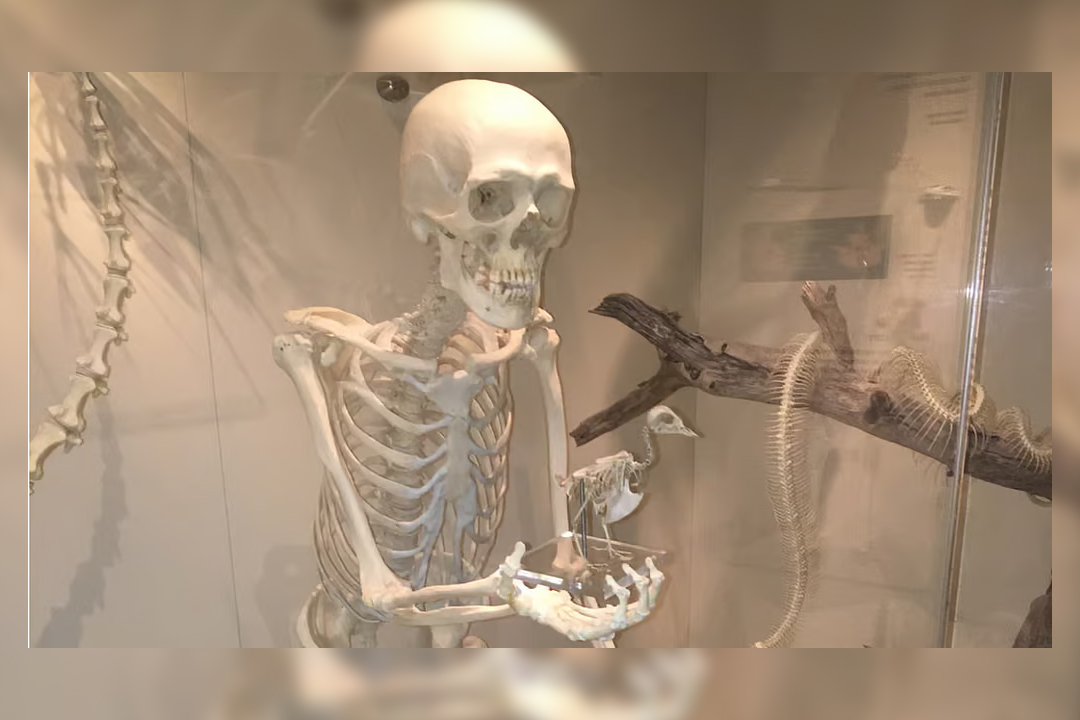
His remains spent nearly 80 years as a museum exhibit in Australia before finally receiving a dignified burial.
A German war veteran whose skeleton was displayed in an Australian museum for nearly eight decades has finally been laid to rest, 113 years after his death. Johann David Max Dreyssig, a recipient of Germany’s prestigious Iron Cross military honour, was buried at West Terrace Cemetery in Adelaide, Australia.
His coffin, wrapped in the German national flag, was laid to rest during a Lutheran funeral service attended by around 20 members of Adelaide’s German Club.
Dreyssig had earned the Iron Cross for his bravery during the Franco-Prussian War of 1870–71. He migrated to Australia in 1885, where he went on to establish himself as a successful iron and steel businessman.
However, his final years took a tragic turn. In 1913, at the age of 62, Dreyssig sought medical treatment from Dr Archibald Watson, a professor of anatomy at the University of Adelaide, after suffering severe back and abdominal pain.
Examinations revealed that he had cancer. Watson performed abdominal surgery, but Dreyssig died just three weeks later.
Watson was a controversial figure who had previously faced allegations of murder and blackbirding — the practice of forcibly recruiting people from Pacific islands for labour. He was also known for his unusual interest in collecting human remains and body parts.
Under the laws of the time, individuals could not legally donate their bodies to doctors. Consequently, Dreyssig’s skeleton was separated from his body and later sold to a museum in 1920 for just 10.
During the Second World War, in 1942, Dreyssig’s skeleton was put on public display for anatomical education. For nearly 80 years, it remained inside a glass display case at the South Australian Museum.
His remains were displayed in different poses, sometimes seated on a chair holding a bird skeleton and at other times standing with his arms resting behind him. The only identification accompanying the display was a label reading: “Human: Homo sapiens”.
The case attracted international attention in 2009 when a German tourist visiting the museum objected to the display and raised the issue with the German government. The matter eventually developed into a diplomatic controversy.
In 2019, the museum finally removed the skeleton from public display.
However, arranging a proper burial proved difficult because Dreyssig had no surviving descendants. His family line had reportedly ended by 1960.
Eventually, the South Australian Museum and Adelaide’s German community jointly organised his burial.
Museum board chairman Dr Rob Saint acknowledged that unethical and illegal practices had taken place in the name of science.
After more than a century of being treated as a scientific exhibit, Johann David Max Dreyssig has finally received the dignity of a burial befitting a war hero.