

Delhi Air Pollution Turns Severe After Diwali, AQI Soars to 483 Despite GRAP-III Restrictions
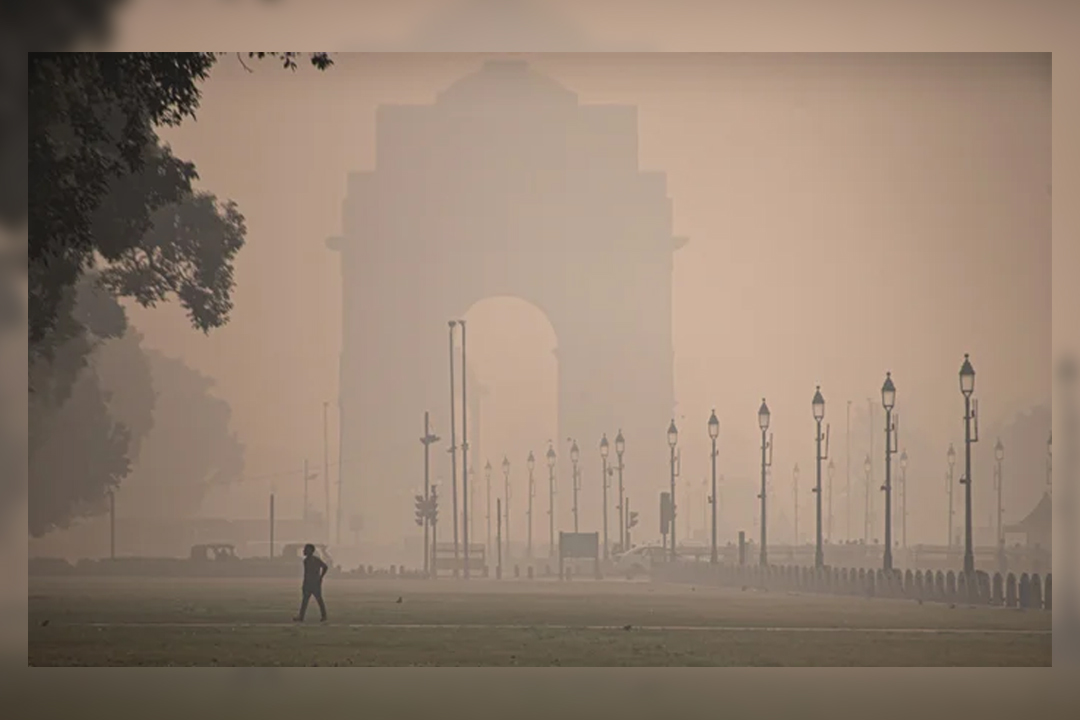
Delhi witnessed a sharp deterioration in air quality following Diwali celebrations, with the Air Quality Index (AQI) climbing to 483 on the morning after the festival, despite strict restrictions under Stage III of the Graded Response Action Plan (GRAP) remaining in force across the National Capital Region (NCR).
According to data from the Central Pollution Control Board (CPCB), Delhi’s overall AQI stood at 483 at 8:10 am, placing it in the ‘Severe’ category. At least 15 monitoring stations across the capital recorded AQI levels above 400, as thick toxic smog engulfed several neighbourhoods and major roads.
Among the worst-affected areas, Vivek Vihar recorded an AQI of 445, while Burari Crossing registered 441. Jahangirpuri reported readings ranging between 433 and 442, while Rohini recorded levels between 430 and 438. Delhi Technological University (DTU) registered an AQI between 430 and 434.
Other monitoring stations also reported alarming pollution levels, with North Campus recording 433, Bawana 427, Ghazipur 418, Mundka 417 and Punjabi Bagh between 408 and 409. ITO and the National Institute of Health (NIH) station in Narela recorded AQI levels of 407 each.
The dense smog severely affected visibility across the city. Commuters were forced to switch on their vehicle headlights even during the morning hours to navigate through the thick haze. At the Akshardham flyover, the iconic temple was barely visible due to the heavy layer of pollution.
People in several parts of the capital complained of breathing difficulties, persistent headaches and burning sensations in their eyes.
Meanwhile, Swiss air quality monitoring company IQAir reported AQI levels exceeding 1,000 in Delhi’s Shahdara area. Some other locations remained in the ‘Very Poor’ category, with the Central Road Research Institute (CRRI) on Mathura Road recording 396, Dr Karni Singh Shooting Range 361 and Najafgarh 340.
The pollution spike came despite the authorities implementing Stage III of GRAP on Friday, three days ahead of Diwali, based on forecasts issued by the India Meteorological Department (IMD) and the Indian Institute of Tropical Meteorology (IITM).
Under GRAP-III, several restrictions have been imposed to control pollution levels, including a ban on non-essential construction and demolition activities, stricter vehicle-related restrictions and hybrid classes for primary school students.
The four-stage emergency response framework is implemented by the Commission for Air Quality Management (CAQM) in coordination with the CPCB and the governments of Delhi, Haryana, Uttar Pradesh and Rajasthan.
The situation was not limited to Delhi, as several other major cities also witnessed deteriorating air quality. In Uttar Pradesh, thick smog covered several parts of Lucknow, while haze was reported in Mumbai’s Kalanagar and Bandra areas.
In Mumbai, monitoring stations recorded an AQI of 264 at Kherwadi-Bandra East, 226 at Sewri and 221 at Ghatkopar.
According to CPCB’s classification, an AQI between 401 and 500 falls under the ‘Severe’ category. The alarming post-Diwali pollution levels have once again raised serious concerns over public health and the deteriorating air quality across major Indian cities.