

Defence, Space and Trade: China and Pakistan Mark 75 Years of Strategic Partnership
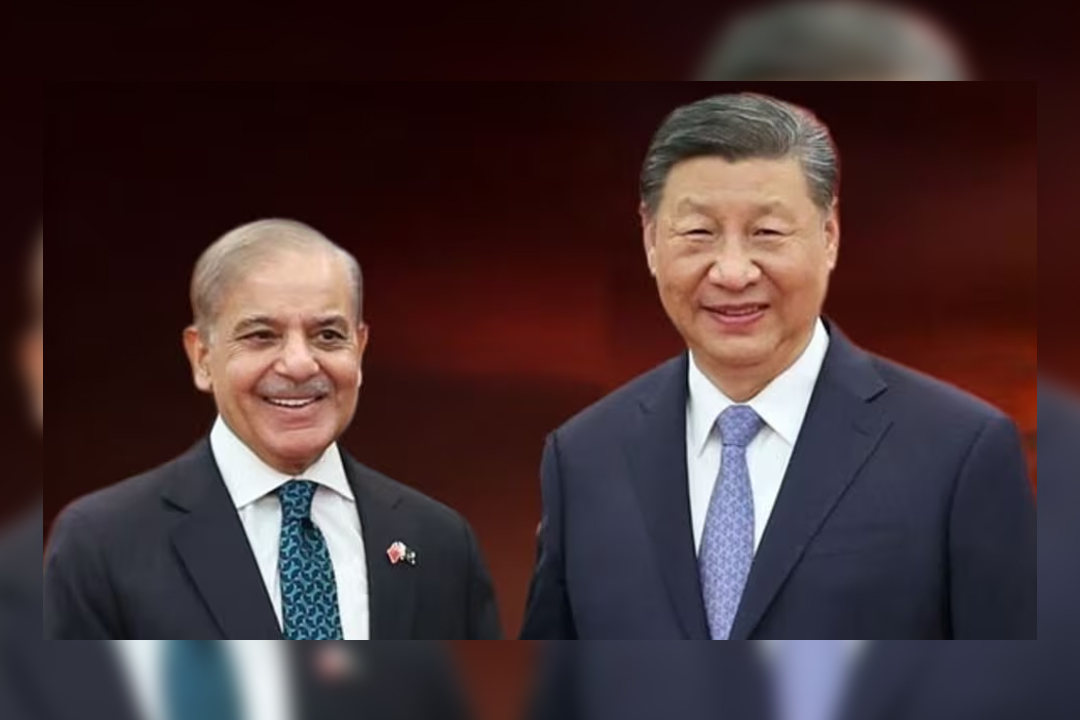
From jointly developed fighter jets and military exercises to major infrastructure projects and space exploration, China and Pakistan have expanded their cooperation across multiple sectors over the past 75 years. The partnership has entered a new phase with Pakistani astronaut Muhammad Zeeshan Ali joining China’s Shenzhou-24 mission, marking a historic milestone in bilateral relations.
China and Pakistan have long described their relationship as an ‘iron brotherhood’, reflecting decades of close cooperation in defence, trade, infrastructure and technology.
On Wednesday, November 25, 2026, Pakistani astronaut Muhammad Zeeshan Ali travelled to China’s Tiangong space station aboard the Shenzhou-24 mission, alongside Chinese astronauts Tang Hongbo and Wu Yi.
Ali became the first Pakistani to travel into orbit and the first foreign astronaut to participate in China’s crewed space programme. The mission marks a significant milestone as the two countries celebrate 75 years of diplomatic relations.
Defence Cooperation: JF-17 Fighter Jets, Submarines and Military Exercises
Defence cooperation remains one of the strongest pillars of China-Pakistan relations. The two countries collaborate on military equipment, technology, training and joint exercises, with China serving as Pakistan’s largest supplier of major weapons.
One of the most prominent examples of their defence partnership is the JF-17 Thunder fighter jet, jointly developed by China’s Chengdu Aircraft Corporation and Pakistan Aeronautical Complex.
The aircraft is manufactured in Pakistan with technical support from both countries. Pakistan has also started exporting the fighter jet to other nations. In September 2024, Islamabad announced a deal to supply JF-17 Block III aircraft to Azerbaijan.
Naval cooperation is another important component of the partnership. Pakistan is acquiring eight Chinese-designed Hangor-class submarines under an agreement that includes technology transfer.
Of the eight submarines, four are being built in China and the remaining four in Pakistan. Earlier this year, Pakistan commissioned its first Hangor-class submarine at a ceremony in China attended by President Asif Ali Zardari.
The two countries also regularly conduct joint military exercises across their armed forces. These include ‘Warrior’ for their armies, ‘Shaheen’ for their air forces and ‘Sea Guardian’ for their navies.
The fourth edition of the Sea Guardian naval exercise concluded in April following military drills in the North Arabian Sea.
According to the Stockholm International Peace Research Institute (SIPRI), China accounted for 80 per cent of Pakistan’s major arms imports between 2021 and 2025.
CPEC: A Major Pillar of Economic Cooperation
The China-Pakistan Economic Corridor (CPEC) is one of the largest economic cooperation projects between the two countries and a key component of China’s Belt and Road Initiative (BRI).
Launched in 2013, the project gained momentum following Chinese President Xi Jinping’s visit to Pakistan in April 2015.
CPEC aims to connect China with Pakistan’s Arabian Sea coastline through an extensive network of roads, railways, power plants and other infrastructure projects.
Gwadar Port in Balochistan is one of the most important components of the corridor. China has played a significant role in its development.
Several major infrastructure and transportation projects have been completed under CPEC. These include:
The 120-km Havelian-Thakot section of the Karakoram Highway, improving connectivity between northern Pakistan and China.
The 392-km Multan-Sukkur Motorway, part of the wider Peshawar-Karachi motorway network.
Lahore’s 27-km Orange Line Metro, featuring 26 stations.
The New Gwadar International Airport, completed in 2024.
CPEC 2.0: A New Phase of Cooperation
The second phase of CPEC was formally launched in September 2025, focusing on five key areas: growth, innovation, green development, livelihoods and regional connectivity.
At a CPEC review meeting on August 31, Pakistan’s Ministry of Planning said the first phase had attracted approximately $25 billion in Chinese investment and increased the country’s power-generation capacity by nearly 8,000 MW.
The second phase is expected to expand cooperation in minerals, agriculture, technology, skills development and business partnerships.
One of the key initiatives involves sending around 1,000 Pakistani agricultural experts to China for training in advanced farming techniques. According to the CPEC Secretariat, the first batch has completed its training and returned to Pakistan.
Space Cooperation: From Satellites to Human Spaceflight
Space exploration has emerged as another important area of China-Pakistan cooperation.
In 2011, China launched Pakistan’s communications satellite PakSat-1R. In 2018, it launched two additional Pakistani satellites, PRSS-1 and PakTES-1A.
Pakistan subsequently launched PakSat-MM1 in 2024 to strengthen its communication infrastructure.
In another significant development, Pakistan’s iCube-Qamar satellite travelled aboard China’s Chang’e-6 lunar mission in 2024. Developed jointly by Pakistan’s Institute of Space Technology and Shanghai Jiao Tong University, the satellite was designed to capture images of the Moon.
The two countries later expanded their cooperation to human spaceflight.
In February 2025, Pakistan’s Space and Upper Atmosphere Research Commission (SUPARCO) and the China Manned Space Agency signed an agreement covering astronaut selection and training.
Two Pakistani candidates, Muhammad Zeeshan Ali and Khurram Daud, were selected for training in China. Ali was subsequently chosen for the Shenzhou-24 mission.
His participation marks the first time a foreign astronaut has joined China’s crewed space programme, opening a new chapter in bilateral space cooperation.
Mutual Support on International Issues
China and Pakistan have also maintained close coordination on several international issues.
Pakistan has consistently supported China’s position on Taiwan, while Beijing has repeatedly reaffirmed its support for Pakistan’s sovereignty, independence and territorial integrity.
In a joint statement issued on May 26, 2026, to mark 75 years of diplomatic relations, the two countries pledged to strengthen defence and security cooperation, advance CPEC 2.0 and expand trade and regional connectivity.
They also reaffirmed their commitment to the 2025-2029 Action Plan aimed at building an even closer China-Pakistan partnership.
As the two countries mark 75 years of diplomatic relations, their cooperation continues to evolve beyond traditional defence and economic ties, extending into advanced technology, scientific research and human spaceflight.