

Lahore Tops Global Pollution Rankings, Pakistan Blames India’s Diwali Firecrackers for Toxic Smog
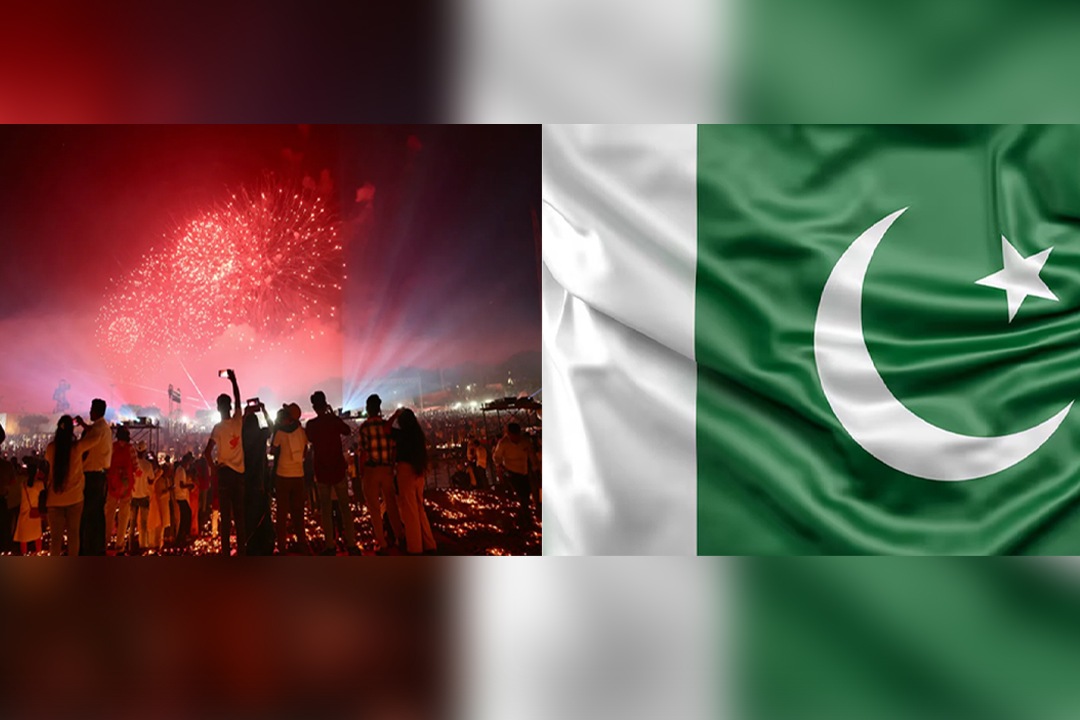
Pakistan alleges that smoke from Diwali celebrations in neighbouring India contributed to Lahore’s deteriorating air quality. Delhi also ranks among the world’s most polluted major cities, highlighting the growing air pollution crisis across South Asia.**
Air pollution has once again triggered tensions between India and Pakistan, with Islamabad blaming smoke drifting across the border from India for the worsening air quality in Lahore. Pakistani authorities have specifically pointed to firecrackers used during Diwali celebrations over the weekend as a possible contributor to the city’s rising pollution levels.
The allegations come as both Lahore and Delhi have featured among the world’s most polluted major cities, drawing attention to the region’s growing environmental crisis.
According to Swiss air quality monitoring organisation IQAir, Lahore ranked as the world’s most polluted major city for the second consecutive day on Tuesday, recording an Air Quality Index (AQI) of 263, a level categorised as ‘very unhealthy’.
The concentration of PM2.5 particles in Lahore was reportedly 37.2 times higher than the World Health Organization’s annual guideline. These microscopic pollutants are particularly dangerous because they can penetrate deep into the lungs and pose serious health risks.
Marriyum Aurangzeb, Environment Protection Minister in Pakistan’s Punjab province, claimed that pollutants had travelled from India into the region through light winds and air currents following Diwali celebrations.
She also expressed hope that Lahore’s air quality would gradually improve from early afternoon as changing weather conditions and shifting wind directions helped disperse the pollutants.
India’s Ministry of External Affairs had not immediately responded to Pakistan’s allegations.
While Lahore recorded an AQI of 263, India’s national capital, Delhi, ranked second among the world’s most polluted major cities on Tuesday, with an AQI of 188, according to IQAir.
Indian government data indicated that firecrackers contributed nearly 55 per cent of the PM2.5 pollution recorded in Delhi a day earlier.
However, experts point out that firecrackers are only one of several sources contributing to the region’s deteriorating air quality. Vehicular emissions, construction dust and smoke from agricultural residue burning are also major contributors, particularly during the winter months.
Pakistan’s latest allegations have revived an earlier disagreement between the neighbouring countries over the movement of air pollutants across their shared border.
In 2024, Pakistan had blamed crop-residue burning in India’s Punjab for contributing to severe air pollution in Lahore. However, Indian meteorological officials challenged the claim, stating that wind patterns at the time indicated air movement from Pakistan towards India.
Air pollution has also emerged as a political issue within India. Prime Minister Narendra Modi’s Bharatiya Janata Party (BJP) has blamed agricultural stubble burning in Punjab for contributing to Delhi’s worsening air quality this month. Punjab is currently governed by the Aam Aadmi Party (AAP).
Local media reports suggested that farm-fire incidents in Punjab increased sevenfold on Sunday, coinciding with Diwali celebrations. However, the Punjab government has maintained that stubble-burning incidents have declined compared with previous years.
With hazardous pollution levels affecting several parts of South Asia, the cross-border movement of smoke and other airborne pollutants has become an increasingly important environmental concern. The latest developments underline the need for coordinated regional efforts to tackle air pollution, rather than focusing solely on political blame.