

India Eyes 114 More Rafale Fighter Jets
What Happens to India’s Indigenous Fifth-Generation AMCA?
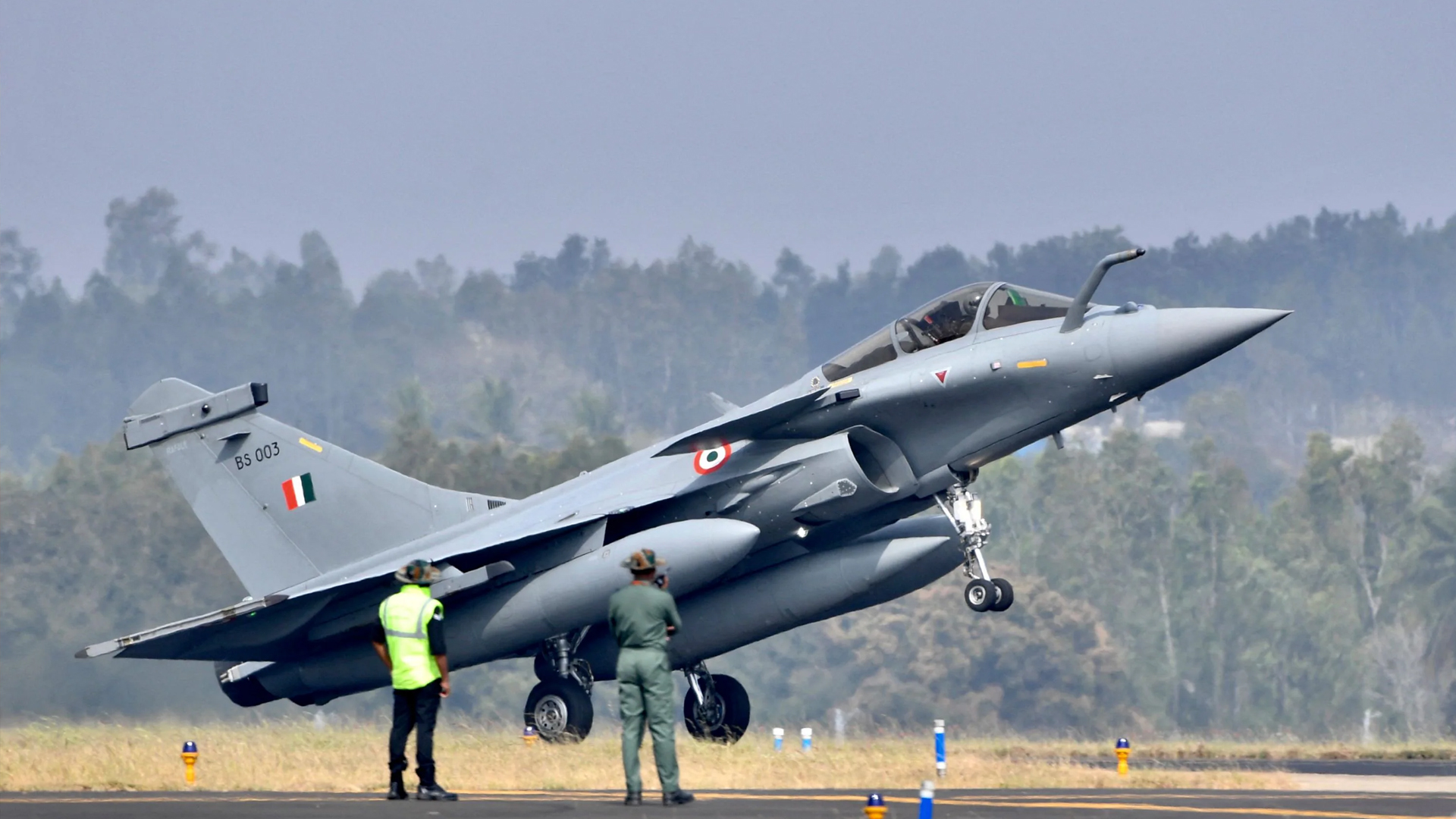
To address its shortage of fighter aircraft, the Indian Air Force is moving ahead with the process of acquiring 114 additional Rafale fighter jets. However, the proposed acquisition has raised fresh questions about India’s air power strategy and the future of its indigenous fifth-generation stealth fighter, the Advanced Medium Combat Aircraft (AMCA).
The Indian Air Force currently has around 29 fighter squadrons, against an authorised requirement of 42. With older fighter aircraft being progressively retired, bridging this capability gap has become a major challenge for the force.
Proposal to Acquire 114 Rafales
Under the MRFA (Multi-Role Fighter Aircraft) programme, the proposal to acquire 114 Rafales has already received Acceptance of Necessity (AoN) from the Defence Acquisition Council. The proposed acquisition is reportedly valued at around ₹3.25 lakh crore, with a major portion of the aircraft planned to be manufactured in India.
India has already received 36 Rafale fighter jets from France. Adding another 114 aircraft would not only boost the IAF’s fighter fleet but could also simplify training, maintenance, weapons integration and infrastructure requirements through greater commonality with the existing Rafale fleet.
But Rafale Is Not a Fifth-Generation Fighter
The Rafale is an advanced 4.5-generation fighter aircraft. It features an AESA radar, electronic warfare systems, Infrared Search and Track (IRST), sensor fusion and the capability to employ long-range missiles such as the Meteor.
However, the Rafale is fundamentally not a stealth fighter. In contrast, China is already operating its fifth-generation J-20 fighter on a large scale and is also progressing with the development and production of the J-35.
One of the key advantages of fifth-generation fighters is Low Observability, or stealth capability. This reduces the aircraft’s radar signature, making it harder to detect and potentially allowing it to identify and engage enemy aircraft earlier.
China’s Rapid Air Power Modernisation
China’s J-20 has already become a major combat aircraft within the PLA Air Force. Alongside it, the J-35 family of fighters could further strengthen China’s fifth-generation air power.
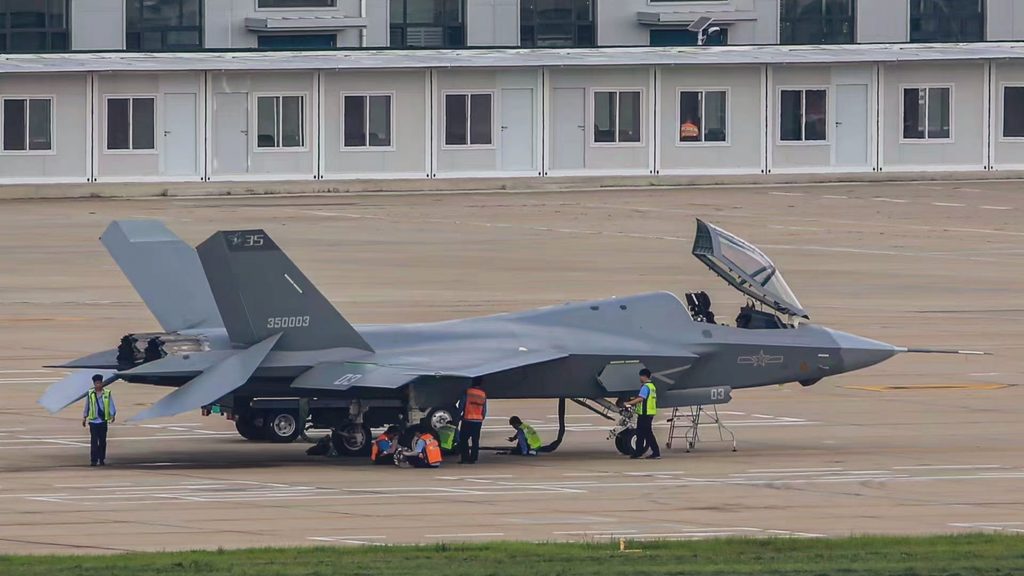
Chinese fighter aircraft are not dependent solely on their onboard sensors. They can operate as part of a broader ‘Kill Chain’ network involving Airborne Early Warning and Control (AEW&C) aircraft, ground-based sensors, electronic warfare systems and long-range weapons.
Pakistan’s J-35 Plans Also Matter
Pakistan has also expressed interest in acquiring China’s J-35 fifth-generation fighter aircraft. Various reports have suggested the possibility of Pakistan acquiring around 40 J-35s.
However, caution is needed regarding these reports. While discussions over the possible supply of J-35s to Pakistan have been reported, the status of any final agreement and actual deliveries remains unclear.
If Pakistan eventually acquires the J-35, India could potentially face advanced stealth fighter capabilities on both its western and northern fronts.
New Technologies in Rafale F4 and F5
The Rafale’s capabilities should not be underestimated simply because it is classified as a 4.5-generation fighter. New Rafales are expected to benefit from improvements in sensors, electronic warfare, communications and weapons integration under the F4 configuration.
France is also working on the next-generation Rafale F5 standard. The F5 is expected to bring enhanced radar, electronic warfare, computing and networking capabilities, along with a greater emphasis on operating alongside unmanned combat aircraft.
However, neither the F4 nor F5 upgrade will turn the Rafale into a stealth fighter.
India’s Hopes Rest on AMCA
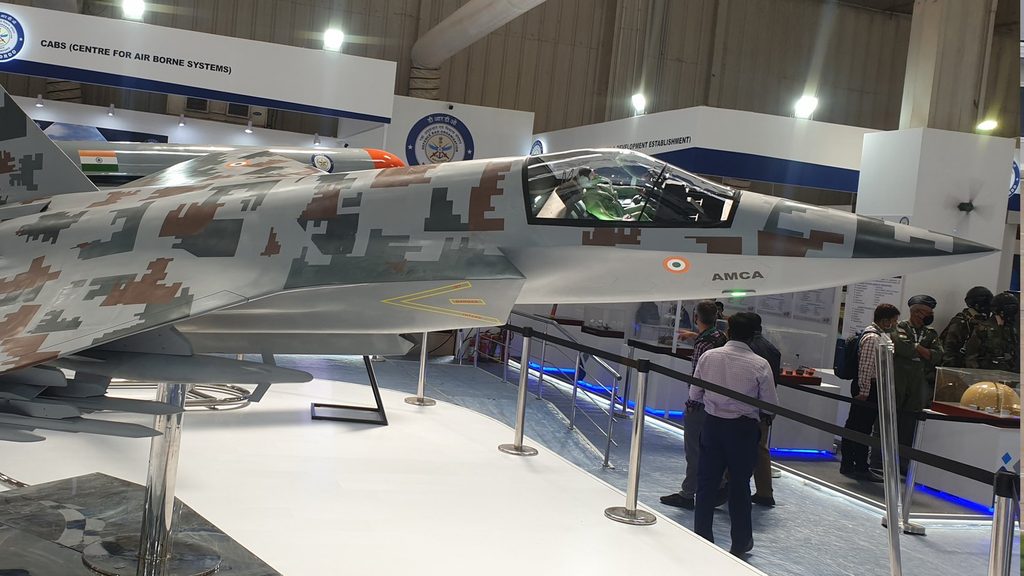
India’s long-term answer to the fifth-generation fighter challenge is the Advanced Medium Combat Aircraft (AMCA). The indigenous fighter is being designed around a Low-Observable, or stealth, configuration.
The first flight of the AMCA prototype is targeted around 2029, while production and induction into the Indian Air Force are being targeted for the mid-2030s.
One of the biggest challenges facing the AMCA programme, however, is engine technology. Initial aircraft are planned to use the GE F414 engine, while India continues to work towards developing a higher-thrust indigenous engine.
Technology Matters as Much as Numbers
The situation is therefore challenging for the Indian Air Force. On one hand, India needs proven and capable aircraft such as the Rafale to urgently address its fighter shortage. On the other, it must accelerate the development of AMCA, Tejas Mk1A, Tejas Mk2, drones, electronic warfare systems and AEW&C capabilities to keep pace with China’s rapidly expanding fifth-generation air power.
For India, therefore, the challenge is not simply to reach the authorised strength of 42 fighter squadrons. The larger objective will be to build an air force capable of dealing with the future of aerial warfare—where stealth, sensors, networking, electronic warfare and long-range weapons will play an increasingly decisive role.