

M. John Harrison Becomes Oldest-Ever Booker Prize Winner with ‘The End of Everything’
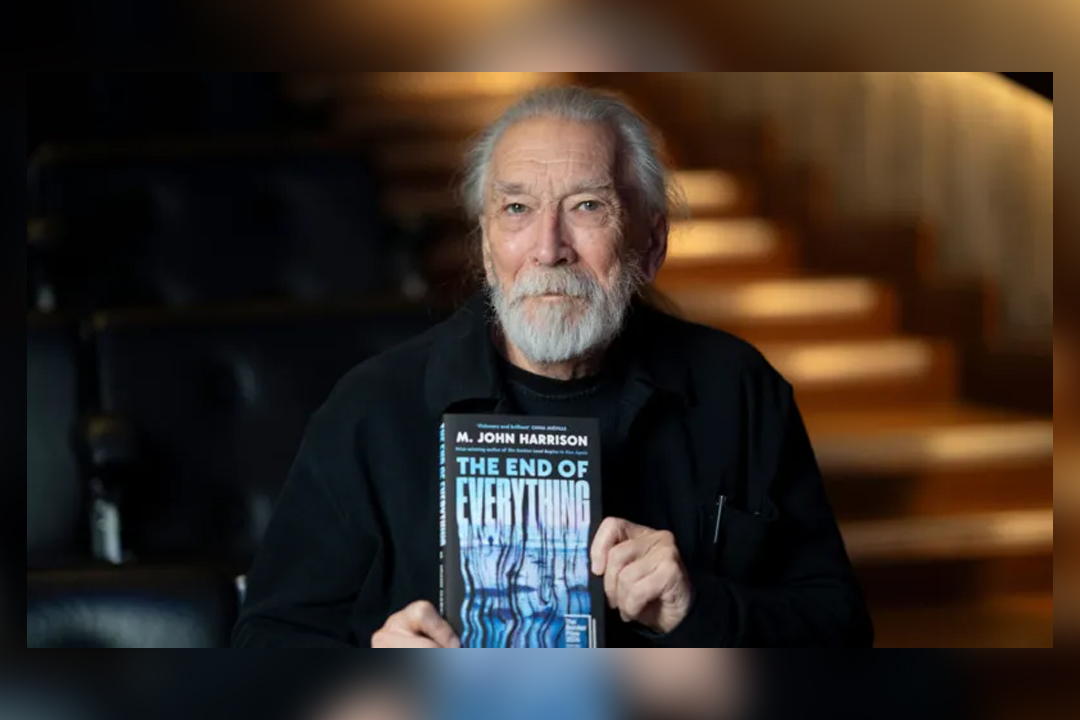
British author M. John Harrison has made literary history by becoming the oldest-ever recipient of the prestigious Booker Prize at the age of 81. He won the 50,000 literary award for his post-apocalyptic novel The End of Everything, which explores the collapse of British society following a mysterious catastrophe.
Harrison, who has spent more than six decades building his literary career and a dedicated readership, was announced as the winner at a ceremony held in London on Monday.
Set in a world transformed by an unexplained disaster, The End of Everything follows a man and his aunt as they struggle to survive along England’s south-eastern coast amid the arrival of mysterious alien beings. The novel has attracted mixed reactions from readers and critics, with some describing it as bleak yet brilliant, while others have found its narrative dreamlike and difficult to interpret.
Dame Mary Beard, who chaired this year’s Booker Prize judging panel, praised the novel for its originality and challenging narrative. She described it as a demanding read, adding that some of the finest works of fiction are those that challenge their readers. According to her, the book unsettles familiar perspectives, offers moments of subtle humour and, surprisingly, leaves readers with a sense of optimism despite its dark subject matter.
Harrison began his writing career in the 1960s and has since published 13 novels, five short-story collections and an unconventional autobiographical work described as an “anti-memoir”.
Although he has never been particularly comfortable with literary labels such as science fiction and fantasy, he is widely regarded as a major figure in literary science fiction. Booker Prize Chief Executive Gaby Wood described him as the first winner to emerge from the established science fiction literary world.
Wood also praised Harrison as an original thinker and a genre-defying writer who takes ideas seriously. She noted that despite its unsettling atmosphere,The End of Everything is essentially a realist novel set in an unfamiliar world inhabited by desperate and disoriented characters.
The novel centres on a man and his aunt attempting to navigate life in the aftermath of an unexplained catastrophe and the appearance of mysterious extraterrestrial beings.
Harrison has deliberately avoided providing extensive explanations about the events unfolding in the story. His intention was to make readers experience the same uncertainty, confusion and disorientation as the characters.
Describing the central theme of the novel, the author said it was about attempting to live as though nothing had gone wrong. He further explained that the real disaster in the story was the inability to comprehend what was happening.
The unusual narrative approach has divided literary critics. While The Guardian praised the novel but noted that it might not appeal to everyone, The New York Times highlighted the difficulty of understanding the conditions of its broken fictional world.
The Literary Review described the book as a work of extraordinary beauty, combining tenderness with terror, while The Telegraph praised its dreamlike storytelling and literary craftsmanship.
The Booker Prize, established in 1969, is awarded annually to the best eligible novel written in English and published within the qualifying period ending on September 30.
This year’s shortlist featured six novels, including works by two previous Booker Prize winners, Marlon James and Douglas Stuart.
The shortlisted titles were:
- The End of Everything by M. John Harrison
- The Disappearers by Marlon James
- Black Bag by Luke Kennard
- May We Feed the King by Rebecca Perry
- The Things We Never Say by Elizabeth Strout
- John of John by Douglas Stuart
The selection process proved particularly challenging for the judging panel. Dame Mary Beard had earlier described the task of agreeing on the final six novels as extremely difficult.
Other members of the judging panel included American novelist Patricia Lockwood, poet Raymond Antrobus, musician Jarvis Cocker and journalist, editor and critic Rebecca Liu.
Speaking about the final deliberations, Dame Mary revealed that the judges engaged in extensive discussions, disagreements and debates before reaching their decision. In an official statement, she said the panel had spent an entire day discussing the six shortlisted novels before unanimously selecting Harrison as the winner.
With this historic achievement, M. John Harrison has not only added another milestone to his remarkable literary career but also set a new age record in the history of the Booker Prize.