

From Tradition to Opportunity: New Initiative Empowers 50 Women Sital Pati Artisans in Sribhumi
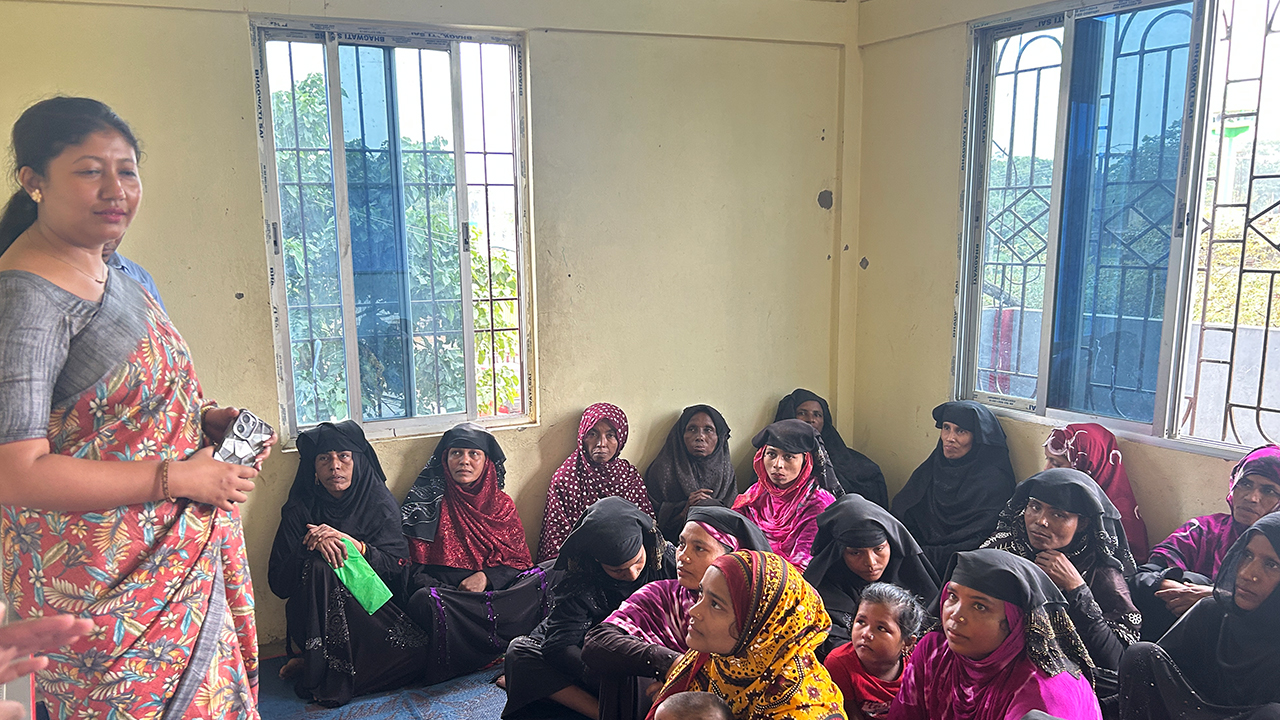
For generations, women from the Patiyara community in Kaliganj, Sribhumi district of Assam, have preserved the traditional art of Sital Pati weaving, producing cooling mats using locally available materials and skills passed down through generations. Now, a new community-centred initiative aims to transform this inherited craft into a stronger source of livelihood while opening doors to digital inclusion and essential government services.
Indian Awaz Foundation (IAF), with Corporate Social Responsibility (CSR) support from the North Eastern Development Finance Corporation Ltd. (NEDFi), has undertaken the Sital Pati Artisan Livelihood & Digital Empowerment Initiative in the Kaliganj–Ratanpur area of Sribhumi district.
The six-month initiative will benefit 50 women artisans, focusing on strengthening traditional livelihoods, improving market opportunities and connecting participating families with digital services and institutional support.
Addressing the challenges behind a traditional craft
Despite their rich craftsmanship and cultural heritage, women of the Patiyara community continue to face significant socio-economic challenges. Limited market access, low selling prices, restricted exposure to modern product designs and educational disadvantages have affected their ability to generate sustainable income.
The community belongs to the Other Backward Classes (OBC), and its reported literacy rate is below 10%, highlighting the need for greater access to education, information and development opportunities.
For many women, Sital Pati weaving remains an important source of household income. However, the absence of organised market linkages and opportunities for product diversification has limited the economic potential of their skills.
Recognising these challenges, the initiative seeks to go beyond the conventional approach of preserving traditional crafts by creating opportunities for sustainable enterprise development.
Two centres to drive livelihood and digital empowerment
The initiative will be coordinated through the Barak Development Center, an operational centre of Indian Awaz Foundation established to facilitate community development and social development activities across the Barak Valley.
Two dedicated facilities will form the foundation of the intervention:
1. Artisan Enterprise Centre
The Artisan Enterprise Centre will focus on improving the economic value of traditional Sital Pati weaving. Women artisans will be encouraged to explore contemporary product designs and diversified applications of Sital Pati beyond conventional mats.
The key areas of intervention will include:
- Introduction to new and contemporary product designs.
- Improvement in product finishing and quality.
- Understanding product costing and pricing.
- Exploring new market opportunities and retail channels.
- Connecting artisans with exhibitions, institutional buyers and corporate gifting opportunities.
- Developing household products, bags and other accessories using traditional weaving skills.
The objective is to help artisans secure better returns for their time, labour and craftsmanship while making their traditional products more competitive in changing markets.
2. Artisan Digital Seva Centre
Alongside livelihood development, the initiative will address the community’s limited access to digital services and government support systems.
The Artisan Digital Seva Centre will function as a local facilitation point, helping artisans and their families access essential online services, understand government welfare schemes and complete registrations and applications.
The centre will provide assistance with documentation, eligibility verification, online applications and follow-ups with relevant departments and institutions wherever required.
The focus will be on providing end-to-end facilitation rather than merely sharing information, ensuring that families who face difficulties navigating digital systems can access the services and entitlements available to them.
Connecting traditional skills with new opportunities
Speaking about the initiative, Md Nazim Ahmed, Founder and Managing Director of Indian Awaz Foundation, highlighted the importance of combining traditional craftsmanship with economic opportunities and access to essential services.
“When we look at traditional artisan communities, we often celebrate their craftsmanship, but we do not always pay enough attention to the challenges they face in their everyday lives. The women of the Patiyara community have preserved Sital Pati weaving for generations. What they need today is not just appreciation for their craft, but access to better markets, information, digital services and the support systems that can improve their livelihoods.
“Through this initiative, we want to connect traditional skills with new opportunities. The Artisan Enterprise Centre will focus on strengthening the economic value of their craft, while the Artisan Digital Seva Centre will help bridge the gap between the community and essential services, government schemes and institutional support. Our larger vision through the Barak Development Center is to build a resource platform that responds to the development needs of communities across the Barak Valley,” he said.
Indian Awaz Foundation also expressed its appreciation to NEDFi for extending CSR support and recognising the importance of strengthening traditional livelihoods and creating better opportunities for women artisans.
Preserving heritage while building a sustainable future
The initiative represents an effort to bring together cultural preservation, women’s economic empowerment and digital inclusion under one community-centred development model.
For the women of Kaliganj, Sital Pati weaving is much more than a traditional occupation. It reflects generations of inherited knowledge, cultural identity and the contribution of women who have kept the craft alive.
However, preserving a traditional skill also requires ensuring that it remains economically viable and attractive to younger generations.
By combining enterprise development with access to digital services and institutional support, the initiative seeks to create a more organised support system for the participating artisans and their families.
Ultimately, the goal is not simply to preserve a traditional craft, but to ensure that the women who have sustained it for generations can build a more secure, independent and dignified future through their skills.