

Pakistan Makes Historic Leap in Space Exploration as First Astronaut Heads to Chinese Space Station
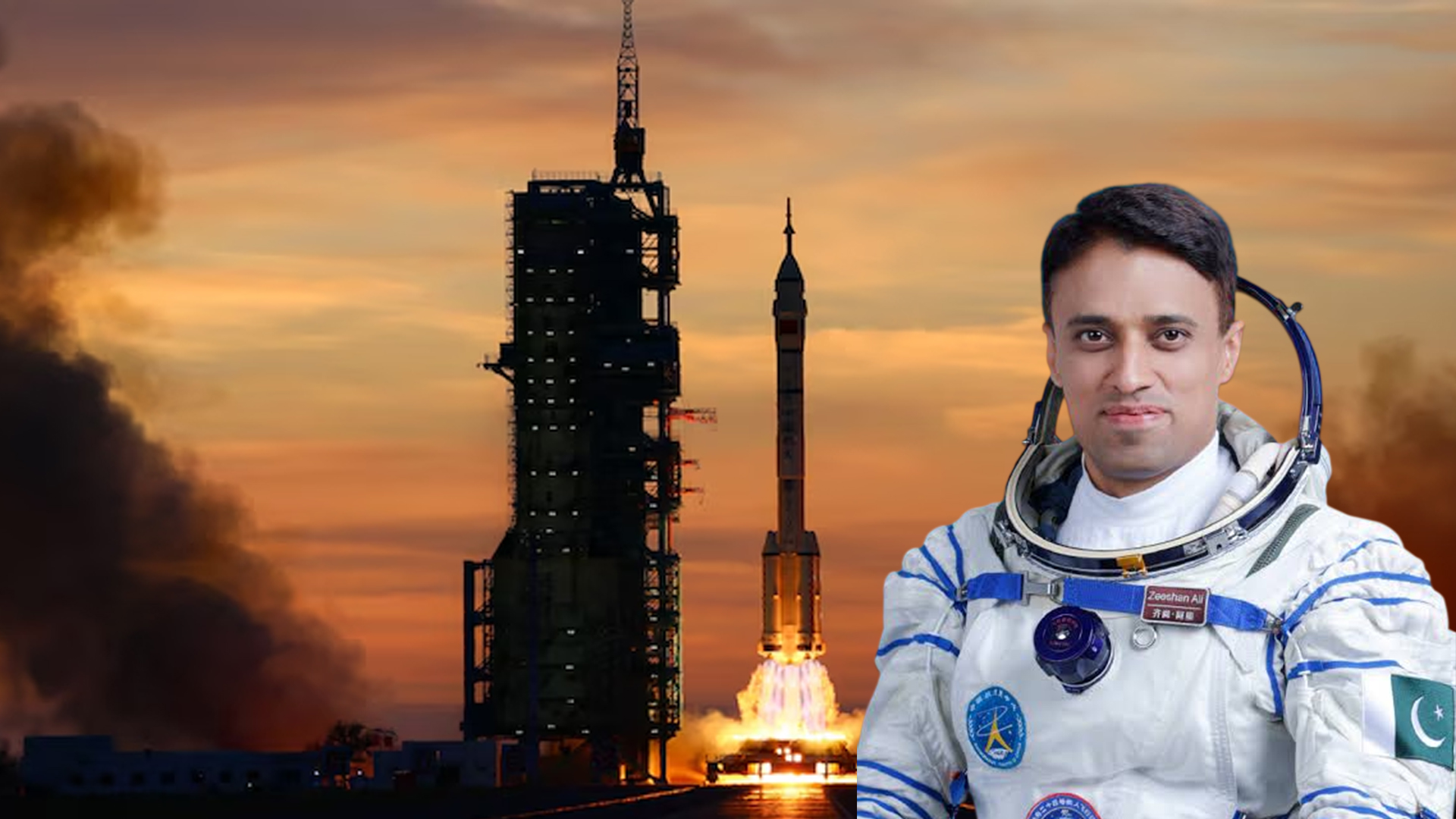
Pakistan has entered a new chapter in its space exploration journey, marking a historic milestone with the successful launch of its first professionally trained astronaut into Earth’s orbit. Muhammad Zeeshan Ali’s participation in a Chinese human spaceflight mission represents a significant breakthrough for Pakistan’s scientific and technological ambitions, while also highlighting the growing strategic partnership between Islamabad and Beijing.
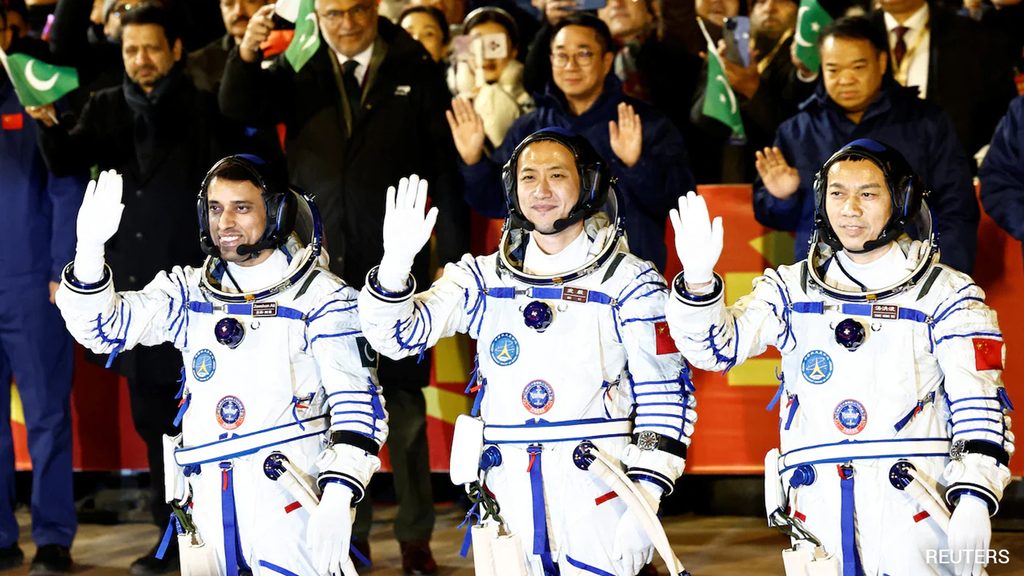
The Shenzhou-24 spacecraft was launched aboard a Long March-2F rocket from the Jiuquan Satellite Launch Centre in northwestern China at 5:48 am IST on Wednesday. The spacecraft carried Pakistani astronaut Muhammad Zeeshan Ali alongside two Chinese astronauts, Tang Hongbo and Wu Yi. Following the launch, Chinese space authorities confirmed that the spacecraft had successfully entered its designated orbit, declaring the mission a complete success.
For Pakistan, the achievement goes far beyond a successful rocket launch. It marks the culmination of years of preparation and international cooperation, giving the country an opportunity to participate in orbital human spaceflight. Ali’s journey also represents a significant step in Pakistan’s efforts to establish a stronger presence in the global space exploration community.
A Historic First for Pakistan
Muhammad Zeeshan Ali has become the first Pakistani national to enter Earth’s orbit as a professionally trained astronaut. His participation also marks a historic development in China’s human spaceflight programme, as he becomes the first foreign astronaut to travel aboard a Chinese crewed mission to the Tiangong space station.
A former member of the Pakistan Air Force, Ali underwent extensive astronaut training in China, preparing for the technical and physical challenges of space travel. His training included spacecraft operations, emergency response procedures, physical conditioning and scientific research protocols.
During the mission, Ali will serve as a payload specialist, focusing primarily on scientific experiments and research activities aboard the orbital laboratory. He is expected to spend approximately five to ten days in space, working alongside Chinese astronauts on scientific and technological experiments.
The mission is particularly significant when viewed against Pakistan’s earlier experience in space travel. In 2023, Pakistani adventurer Namira Salim became the first Pakistani to travel to space through a Virgin Galactic commercial suborbital flight. However, Ali’s mission is fundamentally different, as it involves entering Earth’s orbit and participating in research activities aboard a space station.
China’s Tiangong Opens a New Door to International Cooperation
The mission is equally important for China, which is steadily expanding its ambitions in human spaceflight and international scientific cooperation.
China’s Tiangong space station, whose name translates to ‘Heavenly Palace’, became fully operational in 2022. Built independently after China was excluded from participation in the International Space Station programme, Tiangong has emerged as a major platform for scientific research, long-duration human spaceflight and advanced technological experiments.
By including a Pakistani astronaut in its crewed space programme, China has taken an important step towards opening its orbital laboratory to international participation.
The development reflects Beijing’s broader ambition to establish Tiangong as an international destination for scientific collaboration and research in low Earth orbit. As discussions continue over the future operational lifespan of the International Space Station, China is seeking to strengthen its position in the global space research landscape.
China has also set an ambitious target of sending astronauts to the Moon by 2030, making international partnerships and technological advancement important components of its long-term space strategy.
China-Pakistan Partnership Reaches New Heights
The successful mission highlights the expanding strategic relationship between Pakistan and China, which has increasingly extended into advanced science and technology.
Over the past several decades, the two countries have developed cooperation in satellite technology, telecommunications, Earth observation, remote sensing and space research. Human spaceflight now represents one of the most significant developments in that partnership.
An agreement signed in February 2025 between Pakistan’s Space and Upper Atmosphere Research Commission (SUPARCO) and the China Manned Space Agency helped pave the way for Pakistani participation in China’s astronaut programme.
Under the arrangement, two Pakistani candidates were selected for astronaut training in China. Following an intensive preparation process, Muhammad Zeeshan Ali was chosen for the historic mission.
For Pakistan, China’s support provides access to advanced space infrastructure, technical expertise and research opportunities that would otherwise require substantial investment and years of independent development. For Beijing, the mission strengthens its ambition to build a wider international network of space cooperation.
The partnership therefore carries significance beyond diplomatic and economic relations, demonstrating how bilateral cooperation can create opportunities in some of the world’s most technologically advanced fields.
A New Beginning for Pakistan’s Scientific Ambitions
Ali’s historic journey could have a lasting impact on Pakistan’s scientific and technological development. Participation in an orbital mission provides valuable experience in human spaceflight, scientific experimentation and the practical challenges of working in a microgravity environment.
The achievement is also expected to inspire young Pakistanis to explore careers in astronomy, aerospace engineering, space science and advanced research.
However, participation in a single international mission does not automatically establish the capacity to conduct an independent human spaceflight programme. Building such capabilities would require sustained investment, advanced research infrastructure, specialised training and continued international cooperation.
For Pakistan, the immediate significance lies in the experience and opportunities created by this mission. It provides a foundation upon which the country can seek to expand its future role in space research and technology.
As Muhammad Zeeshan Ali begins his historic journey aboard China’s Tiangong space station, Pakistan finds itself at an important turning point in its scientific history.
The successful launch is more than a moment of national pride. It represents a major leap in the country’s ambition to become a more active participant in humanity’s exploration of space. For a nation that previously celebrated its first suborbital space traveller, sending a professionally trained astronaut into orbit marks an entirely new level of achievement.
Ali’s journey may be remembered not merely as Pakistan’s first major step into orbital human spaceflight, but as the beginning of a much larger ambition to reach beyond Earth’s boundaries and contribute to the future of space exploration.