

Potatoes Successfully Grown in Lunar Soil! NASA-Backed Scientists Achieve Major Breakthrough; What Other Crops Could Be Grown on the Moon?
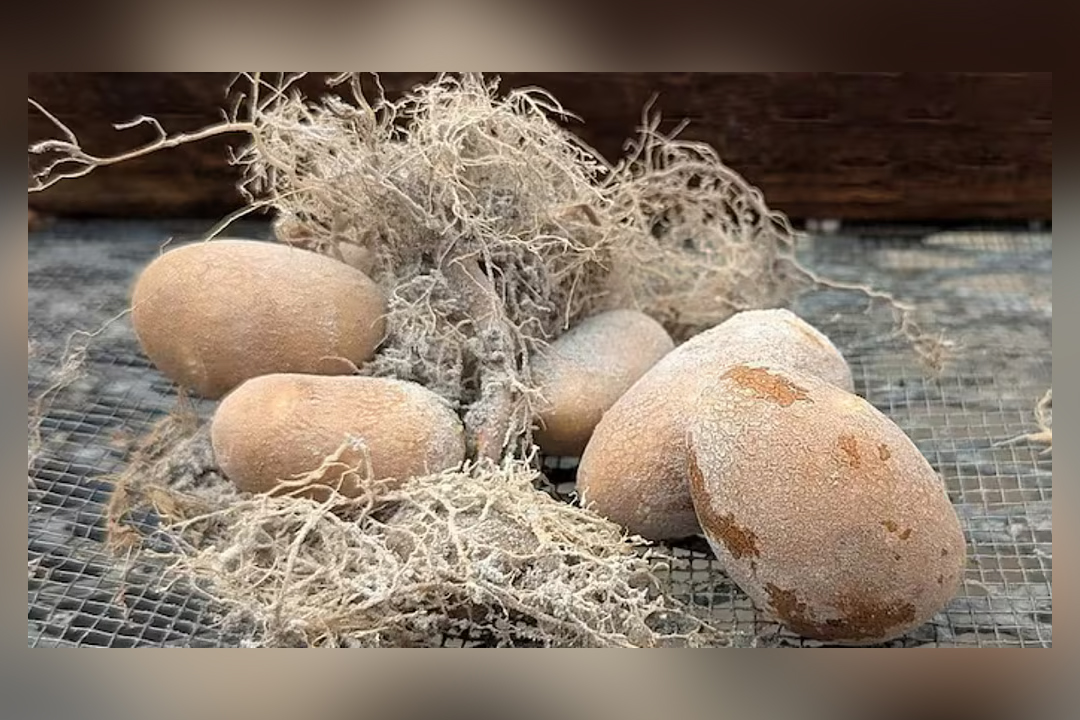
Scientists have achieved a significant breakthrough by successfully growing potatoes in soil brought back from the Moon. The development could help address one of the biggest challenges of future long-term human missions to the Moon- ensuring a sustainable food supply.
The research was conducted by scientists at Oregon State University with support from the US space agency NASA. The findings were published on Thursday in the scientific journal npj Microgravity.
Researchers grew a variety of potato known as ‘Modoc’ in five different types of lunar soil samples. The potato variety, which has reddish skin and white flesh, is known for its rapid growth. The experiment produced encouraging results, raising hopes for future food production beyond Earth.
The lunar surface is covered with a layer of loose rocky material and dust known as ‘regolith’. Unlike Earth’s soil, lunar regolith lacks organic matter and nitrogen. It also contains various heavy metals, including copper, which can be toxic to plants.
As a result, potatoes failed to develop roots or tubers when grown in lunar soil alone.
To overcome this challenge, researchers mixed lunar soil with vermicompost, a nutrient-rich fertiliser produced using red wiggler earthworms.
The experiment found that adding just 5 per cent vermicompost was enough to encourage root growth. When the proportion of vermicompost was increased to 30 per cent, the potatoes produced yields comparable to those grown in Earth soil.
NASA aims to send humans back to the Moon by 2028, while China has also set a target of achieving a similar milestone before 2030. Both countries have plans involving the establishment of a permanent presence on the lunar surface, particularly around the Moon’s south pole.
However, transporting all the food required for long-term missions from Earth would be extremely difficult. This makes growing food on the Moon an important part of future space exploration.
According to scientists, potatoes are particularly suitable for space cultivation because they provide a substantial amount of calories. They are rich in potassium, vitamin C, protein and dietary fibre. Potatoes also help keep people feeling full for longer.
The experiment was conducted in small pots inside a greenhouse. As a result, the harvested potatoes weighed less than 10 grams each.
Scientists have not tasted the potatoes yet, and the samples have been sent to laboratories for further testing.
Initial tests indicate that the potatoes are safe for consumption and have retained their nutritional value. However, traces of heavy metals were detected in some samples, highlighting the need for further monitoring and safety assessments.
Growing potatoes in space is not an entirely new concept. In 2017, Peru’s International Potato Center reported that potatoes could germinate under conditions simulating the environment of Mars.
Earlier this year, NASA astronaut Don Pettit also successfully grew a purple potato inside a plastic bag aboard the International Space Station (ISS). He named it ‘Spudnik’.
Due to the absence of normal gravity, the potato’s roots grew upwards instead of downwards. Pettit revealed that he was inspired by the Hollywood film The Martian, in which actor Matt Damon grows potatoes on Mars.
Apart from potatoes, scientists are also exploring the possibility of cultivating several other crops in lunar soil.
In March, researchers successfully grew chickpeas in lunar soil mixed with vermicompost. Experiments are also underway to study the growth of tomatoes, lettuce and alfalfa.
David Handy, a co-author of the study, said the technology could have significant applications on Earth as well.
According to him, the technique could prove useful for growing crops in deserts, densely populated urban areas and polluted, infertile lands.
The breakthrough could therefore have implications far beyond space exploration, potentially opening new possibilities for sustainable agriculture both on the Moon and on Earth.