

World Polio Day 2026 – ” One day, One Focus: Ending Polio For Good”
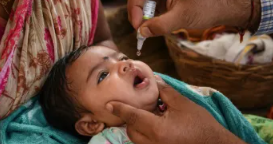
World Polio Day is observed every year on October 24 to raise awareness about poliomyelitis, a highly infectious viral disease that can cause permanent paralysis and, in severe cases, death. The 2026 observance comes with a renewed global call to sustain vaccination efforts and strengthen the fight to eradicate polio completely, under the campaign message “One day, One Focus: Ending Polio For Good”
Although the world has made remarkable progress in combating the disease, polio remains a public health concern in some parts of the world. The Global Polio Eradication Initiative (GPEI) and its partners are urging governments, healthcare workers, communities and donors to maintain their commitment until every child is protected.
Global progress and the importance of vaccination
According to the World Health Organization (WHO), global polio cases have declined by more than 99% since 1988, when the Global Polio Eradication Initiative was launched. At that time, an estimated 350,000 or more cases were reported annually across more than 125 endemic countries. As of 2025, Afghanistan and Pakistan remained the two countries where wild poliovirus transmission was endemic.
Polio primarily affects children under five years of age. The virus can invade the nervous system, causing irreversible paralysis and sometimes death. There is no cure for polio, but vaccination can prevent the disease. Both the oral polio vaccine (OPV) and the inactivated polio vaccine (IPV) play important roles in preventing infection and interrupting transmission.
The 2026 campaign also highlights the need to address vaccine misinformation, reach children in conflict-affected and underserved communities, and maintain adequate funding for immunisation programmes. Even countries that have eliminated wild poliovirus remain vulnerable to its reintroduction as long as transmission continues elsewhere.
India’s journey towards a polio-free nation
India’s achievement in eliminating wild poliovirus remains a significant milestone in public health. The country’s last reported case of wild poliovirus was recorded on January 13, 2011, in Howrah, West Bengal. On March 27, 2014, the WHO South-East Asia Region, including India, was officially certified polio-free.
The success was built on the nationwide Pulse Polio Programme, launched in 1995, repeated vaccination campaigns, door-to-door immunisation, community participation and extensive surveillance. Government health workers, the WHO, UNICEF, Rotary International and other partners played important roles in reaching children across urban and remote areas.
India’s broader immunisation programme continues to support these gains. According to the Press Information Bureau, full immunisation coverage in India reached 98.4% in January 2026, compared with 62% in 2015. The Universal Immunisation Programme reaches approximately 2.9 crore pregnant women and 2.54 crore newborns annually, providing vaccines free of cost. These figures cover overall immunisation, not polio vaccination alone.
Why vigilance remains essential
Despite India’s long-standing polio-free status, health authorities continue to emphasise vaccination and surveillance. The risk of poliovirus importation persists while wild poliovirus transmission continues in other parts of the world. Children must receive polio vaccines according to the recommended immunisation schedule, including during government vaccination campaigns.
World Polio Day 2026 serves as a reminder that eliminating the disease in one country is not the same as eradicating it worldwide. Sustained vaccination coverage, effective disease surveillance, public awareness and international cooperation remain essential to prevent a resurgence.
The message is clear: every child must be protected, every missed vaccination matters, and the global fight against polio must continue until the virus is eradicated everywhere.