

India Will Exercise Right to Defend Itself Against Terrorism: EAM Jaishankar
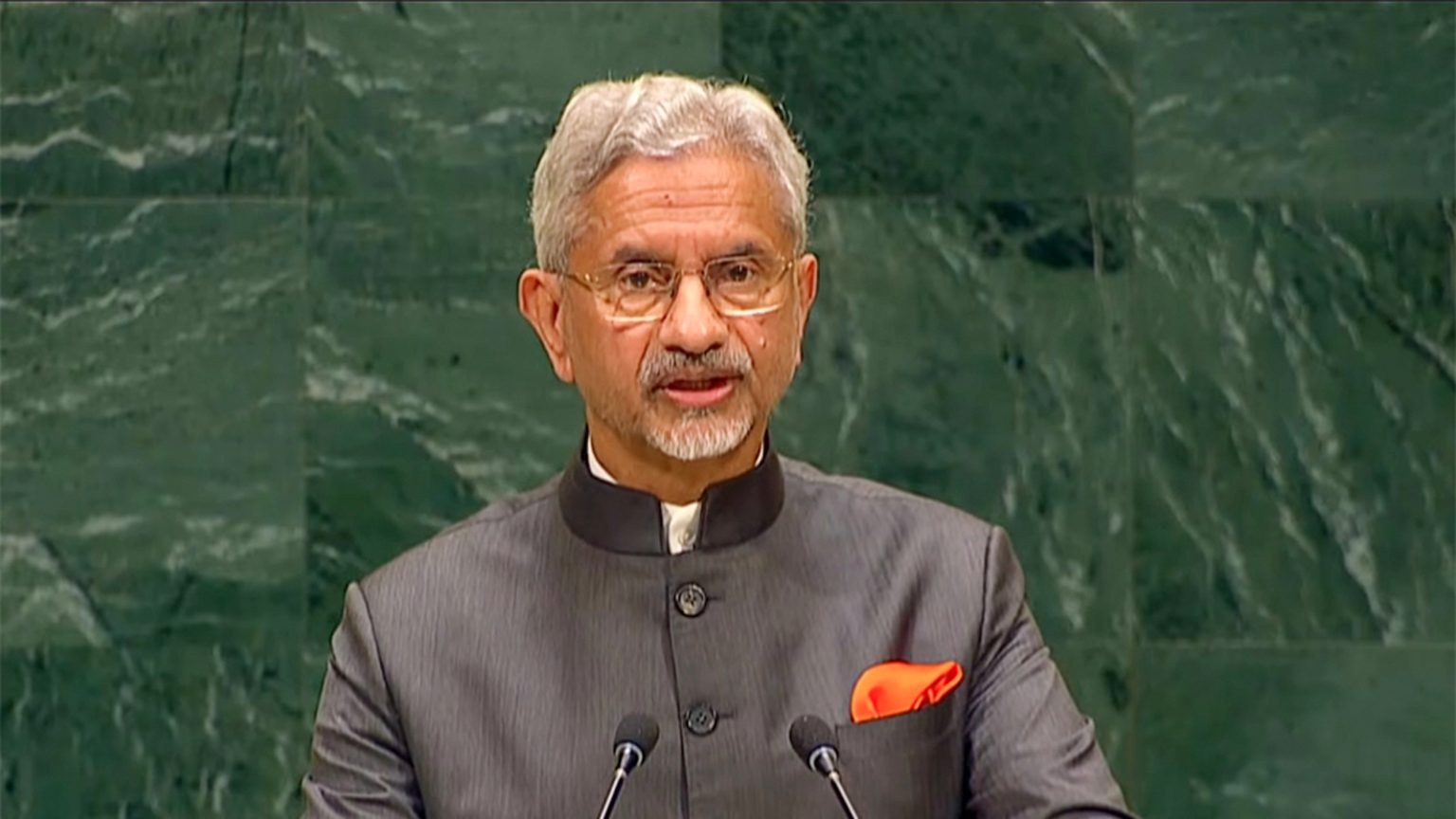
India will exercise its right to defend itself against terrorism, External Affairs Minister S. Jaishankar said while addressing the 81st session of the United Nations General Assembly (UNGA) in New York on Saturday. He also said countries that sponsor cross-border terrorism must be held accountable.
Calling terrorism a continuing threat to international peace and security, Jaishankar stressed that there should be no dilution in the global approach of “zero tolerance” towards terrorism. He also called for greater focus on exposing and disrupting the financial networks that support terror activities.
Responding to remarks made at the UN a day earlier, Jaishankar said attempts to normalise terrorism or seek immunity from its consequences would not be accepted. “Our right to defend ourselves against terrorism, will be exercised,” he said.
Beyond terrorism, the minister spoke about the ongoing conflicts in the Gulf, Ukraine and West Asia. He called for restraint, de-escalation and protection of civilians, while emphasising the importance of uninterrupted energy and commercial flows and the safety of ships and seafarers.
On Ukraine, Jaishankar reiterated India’s position that “endless war must give way now, to an end to war.” On West Asia, he said India supported a durable peace based on a Two-State solution and highlighted India’s humanitarian assistance to Palestinians.
Global South and AI
Jaishankar also highlighted what he described as a “4F crisis” facing the Global South — food, fuel, fertilizer and finance. He warned that supply disruptions, fertilizer shortages and economic pressures were putting development gains under strain.
Artificial intelligence was another major focus of his address. Jaishankar said AI could become a transformative tool for human empowerment and development, while stressing that countries should have the ability to develop AI ecosystems suited to their national priorities.
India’s global role
Highlighting India’s development partnerships, Jaishankar said the country had undertaken 600 major development projects across 78 nations, covering areas including infrastructure, agriculture, manufacturing, technology and capacity building.
He also highlighted India’s humanitarian assistance during disasters and conflicts and its contribution to UN peacekeeping operations.
Calling for a more representative international system, Jaishankar said the world was moving towards a multi-polar order and argued that large sections of humanity could not remain excluded from global decision-making. He concluded by stressing the need for greater commitment to peace, development and prosperity.