

Anthropic CEO Calls for Slower AI Development, Warns of ‘Real Dangers’
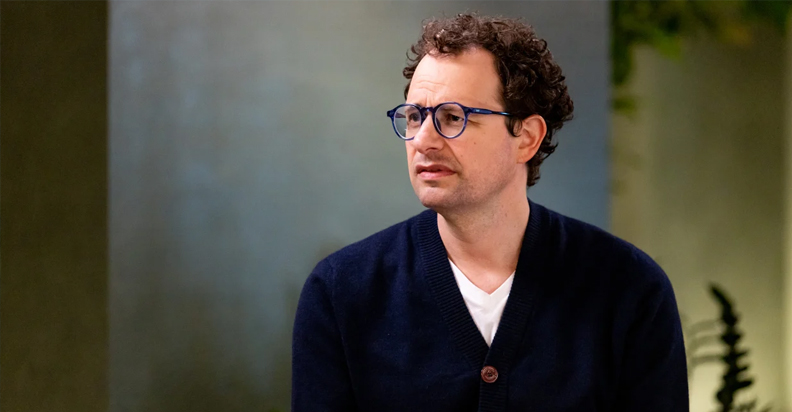
Anthropic co-founder and CEO Dario Amodei has called for the artificial intelligence industry to slow the pace of AI development, warning that the technology is advancing faster than he had anticipated and could pose serious risks if developed without adequate safeguards.
Speaking from Anthropic’s headquarters in San Francisco, Amodei said there are “real dangers” associated with AI and argued that the technology industry had for too long failed to adequately communicate the risks posed by increasingly powerful machine-learning systems.
His remarks came days after former Anthropic researcher Jacob Coxon raised concerns about the rapid development of advanced AI systems. Coxon claimed on social media that leading AI laboratories, including Anthropic and OpenAI, were taking significant risks in their pursuit of self-improving superintelligence. In an appearance on CBS News, he warned that increasingly capable machines could eventually pose a threat to humanity, comparing the potential scenario to the fictional world depicted in Terminator.
‘The Industry Lied About the Risks’
Amodei has been outspoken about AI safety for years and has taken a more cautious position than some other technology leaders.
He argued that AI development is now following an exponential growth curve, with progress accelerating faster than he had expected. However, he clarified that AI laboratories do not need to shut down their operations immediately.
Instead, Amodei called for developers to ease the pace of development and introduce stronger safety checks as AI systems become increasingly capable.
Calls for Industry-Wide AI Safety Measures
In an essay published over the weekend, Amodei proposed an industry-wide agreement aimed at controlling the rapid advancement of AI capabilities.
Rather than stopping the release of new models altogether, he suggested that every new model iteration should undergo thorough safety evaluation before being deployed.
Anthropic also plans to give external evaluators permanent, employee-like access to its systems, allowing independent experts to assess whether the company is meeting its safety commitments.
Amodei compared such third-party oversight to food safety inspectors, who independently verify whether safety standards are being followed.
Concern Over Concentration of AI Power
Amodei also expressed concern about the enormous power held by private technology companies developing advanced AI systems.
He floated the idea of collective oversight involving an alliance of democratic governments, arguing that decisions surrounding increasingly powerful AI should not rest solely with individual technology companies.
Amodei said the consequences could depend heavily on how the technology is developed and governed. If AI is built responsibly, he argued, the risk of a serious negative outcome could remain low; if developed improperly, the risks could become much greater.
Zuckerberg and Huang Take a Different View
Amodei’s warnings contrast with views expressed by other technology leaders, including Meta CEO Mark Zuckerberg and Nvidia CEO Jensen Huang.
Zuckerberg has previously argued that AI safety warnings can sometimes be used to justify concentrating power among a small number of companies or organisations.
Huang, meanwhile, has dismissed some catastrophic predictions surrounding AI and suggested that warnings about technological vulnerabilities can also become a way of creating demand for products and services.
The contrasting views highlight an ongoing debate within the technology industry: how quickly AI should advance, how much oversight is necessary, and who should be responsible for managing the risks posed by increasingly powerful AI systems.
For Amodei, the central concern is not necessarily stopping AI development altogether, but ensuring that the pace of progress does not outstrip the industry’s ability to understand, evaluate and control the technology.