

Anti-Paper Leak Bill Explained: What will change? Key differences between the new bill and the 2024 law
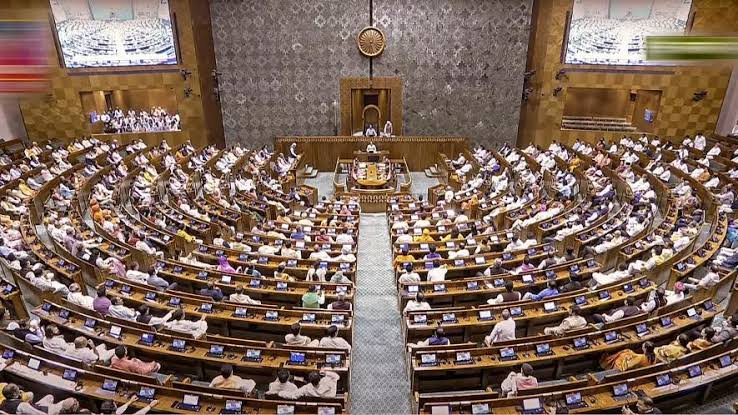
The battle against paper leaks has now reached Parliament and, in a major move aimed at restoring faith in India’s examination system, the Central government introduced the proposed Anti-Paper Leak (Amendment) Bill in the Lok Sabha on Monday to make existing provisions significantly stricter. Union Minister Jitendra Singh tabled the bill in the Lok Sabha, days after widespread protests by students over alleged paper leaks. The proposed legislation seeks to strengthen the legal framework to curb exam-related fraud, speed up investigations, and ensure swift punishment for offenders.
The government has proposed dedicated Fast Track Courts in every state for hearing paper leak cases. Under the new framework, trials will be conducted on a day-to-day basis and completed within 90 days, with courts expected to pronounce judgments within the stipulated timeline.
Parliamentary Affairs Minister Kiren Rijiju appealed to the Opposition to support the legislation, saying, “This is not the time for politics. I appeal to the Congress and other Opposition parties not to divert the issue. The government has brought important reforms to safeguard the future of our students, and these deserve serious discussion. Excuses will no longer work. This Bill has been introduced for students, and passing it is the government’s priority.”
How is the new Anti-Paper Leak Bill different from the 2024 law?
The proposed amendment introduces sweeping changes to make punishment tougher, investigations faster and judicial proceedings time-bound.
- Harsher punishment: Under the 2024 law, offenders faced imprisonment ranging from three to five years. The new amendment proposes increasing the punishment to ten years of imprisonment, making paper leak offences far more stringent.
- Massive increase in penalty: The existing law prescribed a fine of up to Rs 10 lakh. The amendment proposes increasing the maximum fine to Rs 10 crore.
- Special Task Force for investigations: Earlier, investigations into paper leak cases were handled by the designated central investigative agency.
- The new bill proposes the formation of a dedicated Special Task Force (STF) to exclusively investigate paper leak cases and examination-related irregularities.
- Two-month deadline for investigation: The 2024 Act did not specify any deadline for completing investigations. However, the amendment mandates that investigations must be completed within two months to ensure quicker prosecution.
- Fast Track Courts for speedy trials: Earlier, paper leak cases were heard in regular courts. The proposed law provides for Fast Track Courts in every state, where hearings will take place on a daily basis.
- Judgment within three months: The earlier law had no fixed timeline for delivering judgments. The amendment proposes that courts must deliver verdicts within three months.
- Time-bound appeal in High Court: Under the existing law, there was no prescribed deadline for filing appeals before the High Court. The new Bill allows appeals to be filed within 30 days.
- High Court verdict within three months: The amendment also introduces a timeline for appellate proceedings, proposing that High Courts should decide such cases within three months.
PM Modi continues outreach to students
Prime Minister Narendra Modi has been directly engaging with students on the paper leak issue through a series of video messages. On July 23, he announced that the government was preparing a stronger law to tackle paper leaks.
On July 24, he thanked the Gen Z community for supporting reforms in the examination system. On July 26, the Prime Minister announced the formation of a High-Powered Task Force to recommend long-term structural reforms.
High-powered task force headed by Nandan Nilekani
In his latest video message, PM Modi announced a six-member committee headed by Nandan Nilekani. According to the Prime Minister, the committee will recommend measures to prevent paper leaks, improve transparency in examinations and suggest technology-driven reforms to strengthen trust in India’s examination system.
“We will not spare those responsible for paper leaks. Fast Track Courts have already been established. The examination system will be made more transparent. This committee will recommend how technology can improve transparency and strengthen public confidence in examinations,” the Prime Minister said.
Prahlad Joshi takes charge of Education Ministry
Following protests at Delhi’s Jantar Mantar, Dharmendra Pradhan resigned as Union Education Minister. Prime Minister Modi subsequently assigned the Education Ministry to Prahlad Joshi. The leadership change comes at a crucial time as the Centre is implementing the National Education Policy (NEP) 2020 and preparing a new school curriculum. After assuming office, Prahlad Joshi said he would make every effort to live up to the Prime Minister’s expectations and accelerate ongoing education reforms.
Govt steps up crackdown on paper leak network
The Centre has already initiated several administrative and investigative measures against those allegedly involved in examination irregularities. So far, 47 officials of the National Testing Agency (NTA) have been dismissed. Criminal cases are also expected to be registered against them. According to sources, the move is part of a broader restructuring of the NTA aimed at improving transparency and accountability.
Earlier, the government also reshuffled two senior officials in the Education Ministry. More reforms, including changes to NTA’s outsourcing system and stronger technological safeguards, are expected to be introduced to make examinations more secure.
Meanwhile, the Delhi Police has constituted a Special Task Force (STF) to investigate irregularities in major national examinations, including those conducted by the UPSC and the NTA. Several accused in paper leak cases have already been arrested and sent to judicial custody.