

Multi-Institutional Team Led By IIT Guwahati Develops Framework To Strengthen Informal Transport, Address Congestion
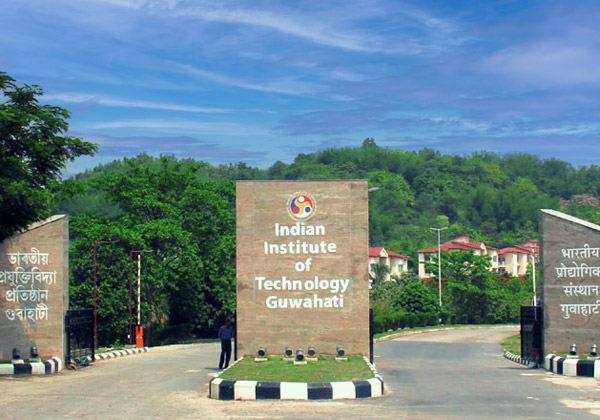
A multi-institutional team of researchers led by the Indian Institute of Technology (IIT) Guwahati has developed a framework to help integrate informal transport services such as autorickshaws, minibuses and vans into mainstream urban mobility while addressing road congestion and environmental concerns.
The research, conducted in collaboration with the Indian Institute of Management (IIM) Kashipur and the National University of Singapore, proposes a policy framework to regulate informal transport systems, which play a key role in providing last-mile connectivity in many developing countries, according to an official release.
The findings have been published in the peer-reviewed journal Transportation Research Part A: Policy and Practice. The study was co-authored by Dr Atanu Bhuyan, Assistant Professor at the School of Business, IIT Guwahati; Dr Abhishek Srivastava and Dr Vivek Roy of IIM Kashipur; and Dr Prateek Bansal of the National University of Singapore.
The researchers noted that rapid urbanisation and rising population density in countries such as India have placed increasing pressure on public transport systems, leading to greater reliance on informal transport services. While these services provide flexible and last-mile connectivity, they often operate with limited regulation, resulting in inconsistent service quality, safety concerns, unauthorised commercial use of private vehicles, traffic congestion and inefficient utilisation of transport infrastructure.
To address these challenges, the research team developed a game-theoretic model to analyse the interactions among four key stakeholders—the government, an informal transport aggregator, a ride-hailing platform and commuters.
Explaining the study, Dr Atanu Bhuyan said the framework evaluates three policy measures: congestion charges for private vehicles operating in busy areas, financial assistance for informal transport operators, and subsidies for users of informal transport services.
“Our framework compares three policy measures — charging private vehicles for driving in congested regions, providing financial assistance to operators of informal transport, and providing subsidies to informal transport users. We also included commuters’ perception of service quality to see how policies can affect travel choices,” Bhuyan said.
The researchers concluded that a combination of congestion pricing and targeted subsidies is more effective than implementing either measure independently, as it can better influence commuter behaviour and improve overall welfare.
According to the release, the framework provides government agencies and urban transport planners with a scientific tool to evaluate and design policies for regulating and integrating informal transport systems into urban mobility networks.